
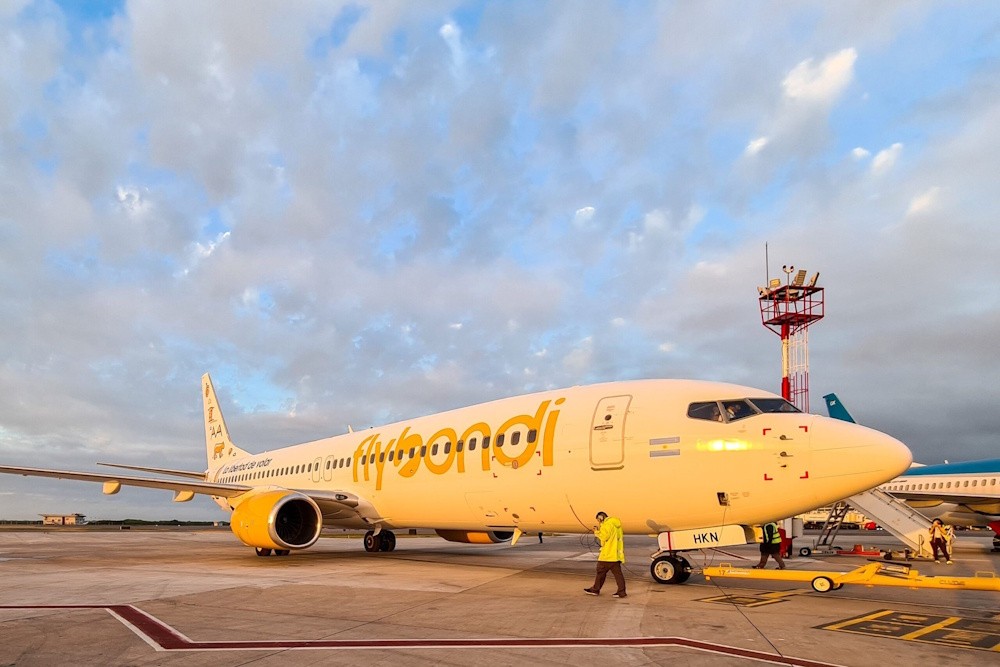
Flybondi has initiated insolvency proceedings after enduring a prolonged crisis that culminated in the airline’s total operational paralysis. The filing was completed last week, and the court responsible for adjudicating the matter was assigned on Monday. There remains an absence of resolution regarding the company’s future trajectory. The low-cost carrier has experienced a 57-day hiatus in flight operations and has downsized its fleet from 13 to merely three aircraft. It has also implemented layoffs affecting hundreds of employees and experienced voluntary departures, all while contending with persistent claims regarding unpaid wages and severance packages. The company also has liens, bankruptcy petitions, and 27 rejected checks totalling more than AR$2.9 billion. The prospect of Flybondi entering insolvency proceedings started to gain momentum in August.
At that time, the company was accumulating unpaid wages, numerous pending severance payments, supplier claims, and bankruptcy petitions. The most recent Flybondi flight operated on the route connecting Bariloche and Ezeiza on August 5. Since that time, the airline has refrained from transporting any passengers. As of Monday, it had been 57 days since operations ceased. The shutdown was accompanied by a significant contraction in the fleet. Of its original 13 aircraft, it currently possesses only three within the country, all of which are not operational at this time. The other 10 were returned to their owners, although some still remain in Argentine territory while the redelivery process is completed. Its website has once again ceased operations.
In the first half of 2026, the company operated with only one or two planes, resulting in a significant number of service cancellations. By July, it had executed merely a portion of its planned flights before ceasing operations completely in August. Flybondi has also proceeded with a notable reduction in its workforce. The initial voluntary retirement packages were introduced in the first half of the year, with layoffs intensifying from April onwards. The company also started to lag in its payment obligations to those who remained employed. By August, employees indicated that their salaries for June and July, along with their mid-year bonus (referred to as aguinaldo), remained outstanding.
The more than 700 former employees were asserting their claims for severance pay due to dismissal without cause, as well as for payments that had been promised in voluntary retirement agreements. By September, over 900 departures had been documented due to layoffs and voluntary retirements, as reported by the workers. At the conclusion of that month, a collective of former employees presented their grievances to the labour secretariat, asserting that the circumstances impacted approximately 1,000 families. In that filing, they reported delays in payments for voluntary retirements, pending severance pay for wrongful termination, and wages owed to workers who remained associated with the company.
