
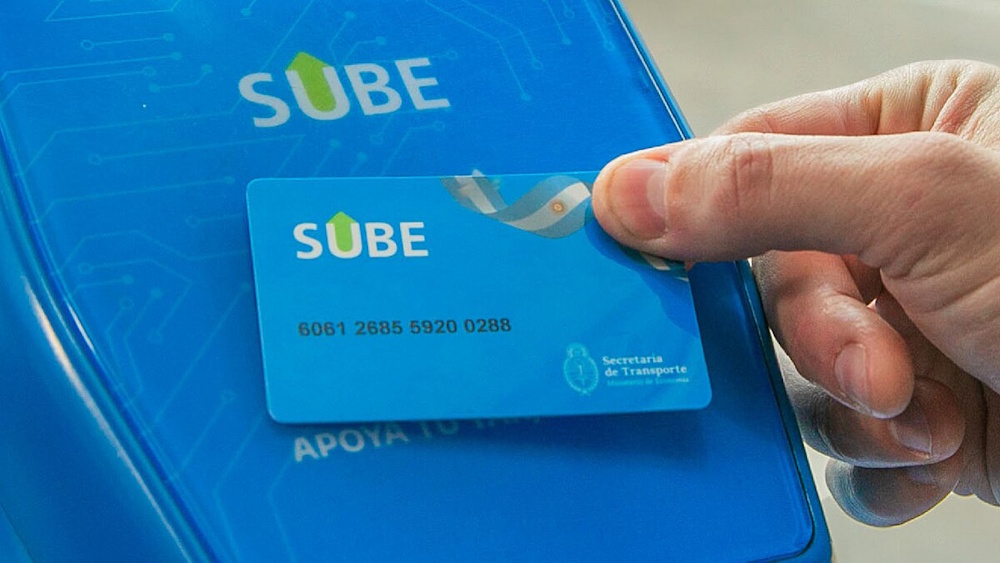
The Sistema Único de Boleto Electrónico (Unique Electronic Ticket System), commonly referred to by its SUBE acronym, achieved widespread adoption in Buenos Aires City and its metropolitan area following its introduction in 2009, supplanting cash and alternative payment methods. However, recent changes in legislation have placed it in a state of uncertainty, and the card may soon be removed from the essential list for tourists in Buenos Aires. The announcement regarding the potential for alternative payment methods for public transport, aside from the SUBE card, was made in August 2024. This was facilitated by decree 698/2024, which permitted “other means of payment to allow interoperability.” Jorge Macri was the first to join the initiative. On December 1, 2024, he announced that the city’s underground, referred to as the “Subte,” would commence accepting payments via debit and credit cards, along with various contactless payment methods, utilizing Near Field Communication systems. This development allows for the potential elimination of the SUBE card, enabling users to opt for any contactless payment method. Payments would be directly charged to a credit card or bank account, eliminating the previous necessity of reloading the card.
A number of companies engaged with the new payment system, providing discounts and cashback incentives for users, leading to a significant surge in its popularity. A report indicates that 35% of all subway trips are paid using alternative methods, including cards or digital wallets on mobile phones, through contactless NFC payments or QR codes. In January 2025, the system was made accessible to select bus lines within the city and metro area, and by May, it was fully adopted by all lines operating solely within the city. Several services that traverse the delineation between Buenos Aires City and the Buenos Aires Province — referred to as “national services” — have likewise embraced the new payment systems. At present, all subway lines, Buenos Aires City bus services, and certain metro area routes facilitate payments via debit or credit cards, as well as through NFC contactless technology or QR codes on mobile devices, in addition to the SUBE system. Consequently, the SUBE has effectively lost its utility for individuals seeking to navigate the confines of the city.
Several bus lines operating solely outside of Buenos Aires City — specifically those numbered over 200 — have begun to accept the new payment methods. However, it is important to note that non-SUBE payment options may not be universally available across all buses or branches, thus advising caution is prudent. Furthermore, buses in Córdoba, Mendoza, Santa Fe, and an additional 13 provinces are now accepting alternative payment methods. It is advisable to verify the availability of the required service in this location. In the Buenos Aires metropolitan region, the sole mode of transportation that has not yet adopted alternative payment methods is the national train service. For those intending to embark on a journey utilizing any of the seven lines, possession of a SUBE card is essential for boarding. At present, there is a lack of information regarding the potential availability of alternative payment methods, including any timelines associated with their introduction. It is advisable to replenish your balance at SUBE points throughout the city; however, it is essential to carry cash for this transaction. Debit and credit cards are accepted at SUBE attention centers. The SUBE card is also available for purchase at that location. These are typically located at subway and train stations as well as community centers throughout Greater Buenos Aires. Locate a compilation of the closest options available to you here. SUBE cards may be recharged through various digital wallets, including MercadoPago and Modo; however, the establishment of an account necessitates possession of an Argentine DNI.
Validation of digital payments must occur via your card, achievable through an automatic terminal located at stations and SUBE centers, or through any mobile device equipped with an NFC system and the SUBE app. Validation can also occur on board buses. To accomplish this, inform the driver “Quiero acreditar una carga” and proceed to touch the card on the payment terminal. This is applicable solely in districts where Carga a Bordo (Onboard Top-ups) is offered. It is essential to register SUBE cards; failure to do so will result in elevated fares across all journeys. Registering your card facilitates the transfer of credit to a new SUBE in the event that yours is lost or stolen, in addition to enabling you to access your journey history. Registration for your SUBE can be completed online via the official website, in person at designated SUBE attention centers, or by telephone at 0-800-777-7823, option 3, during the hours of Monday to Friday, 8 a.m. to 8 p.m. Cards may also be registered via the SUBE application. The SUBE system permits users to maintain a negative balance when funds are depleted, with an upper threshold of AR$1,200 and minimum limits ranging from AR$480 to AR$650 for train services. As of December 1, 2025, the minimum fares for registered SUBE cards are AR$593.52 for buses in Buenos Aires City, AR$658.44 for Buenos Aires Provincial buses, AR$494.83 for national services, AR$1,206 for the subway, and AR$280 for trains. The card’s maximum balance is AR$40,000.