
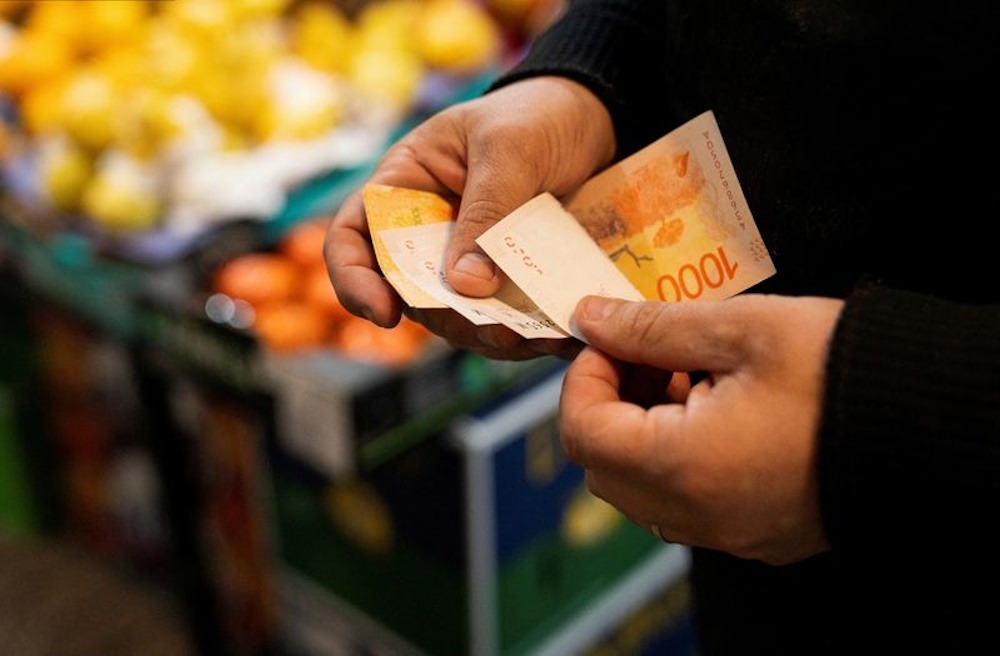
The Industrial Union of Santa Fe has highlighted what it refers to as Argentina’s elephant in the room: the erosion of the middle class. Job losses, declining income across all segments, and constrained consumption are indicative of a more extensive decline. In the face of rising inflation, the government remains committed to a strategy of utilizing wages as a stabilizing factor and is unwilling to endorse collective bargaining agreements that surpass the official parameters established by Caputo. “The decline of the productive system is the decline of the middle class,” stated the chamber representing Santa Fe’s industrialists in a recently published document. Business leaders contend that “a country cannot sustain itself solely on extractive or financial sectors — it needs a vibrant industrial fabric.”
Production data raise significant concerns. The industrial capacity utilization rate remains stagnant, currently around 50%, with certain sectors experiencing levels below 30%. The decline in the number of active companies persists, with the manufacturing sector experiencing a reduction of 2,380 firms compared to December 2023. “There is a genuine risk of establishing a framework in which financial returns surpass the effort required to convert raw materials into added value.” Cristian Fiereder said “A country with its accounts in order but with its industrial plants emptying out is, ultimately, a country mortgaging its future.” Looking forward, the outlook appears unfavorable. The latest consumption and sales data present a rather bleak outlook. A prominent industrialist who conversed with Ámbito emphasized the need to focus on a specific phenomenon: the disintegration of the payment chain. In December, the volume of bounced checks reached a new high of 119,285, marking a threefold increase compared to the same month last year, as reported by the Central Bank.
Simultaneously, the income crisis persists. The recent report elucidates this point effectively. Throughout the previous year, registered wages in the private sector, salaries in the public sector, minimum-level pensions, and the minimum wage have all failed to keep pace with inflation. No individual was exempt from the consequences. The phenomenon can largely be attributed to unilateral government decisions, exemplified by pensions, where indexation and bonuses were determined by decree. Authorities intervened in establishing the minimum wage following unsuccessful negotiations to reach an agreement. President Javier Milei consistently tipped the balance in one direction, leading to a real decline of 9%.
In the context of wages, Caputo adhered to a strict 1% guideline for the entirety of 2024, aiming to mitigate inflationary inertia. The economy minister has compromised private agreements that surpass that threshold by postponing — and in certain instances rejecting — formal endorsement from the Labor Secretariat. As inflation has been on an upward trajectory for seven consecutive months, with the consumer price index nearing 3% rather than 2%, the libertarian administration is steadfast in its commitment to curtail wage growth. Branch 17 of the metalworking sector serves as a pertinent illustration, having secured an agreement between companies and unions in December, yet it remains pending government approval.