
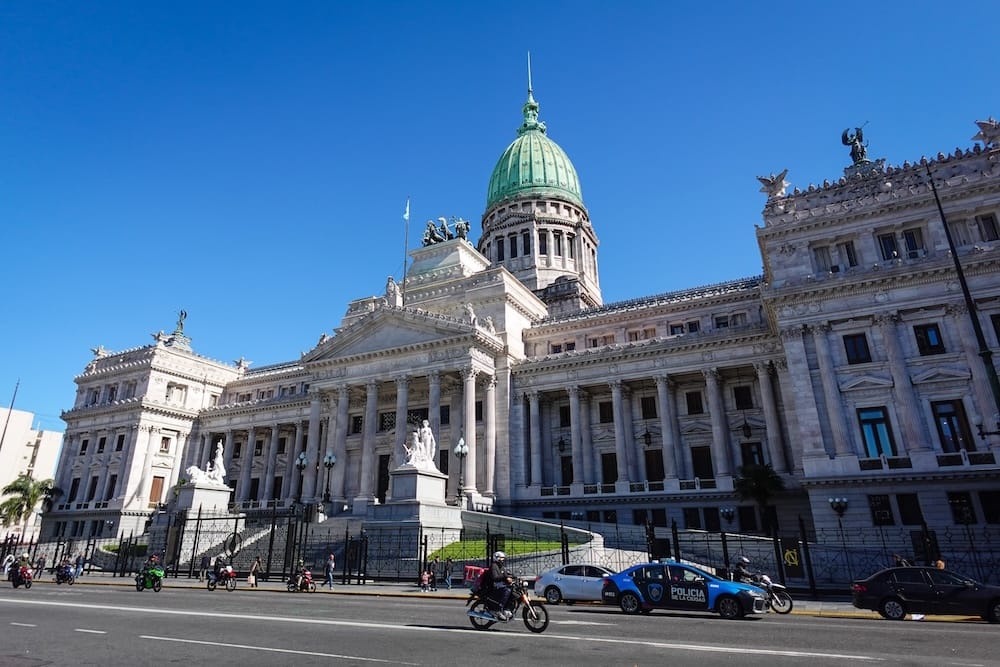
According to Argentina’s President and several major mining companies, the primary obstacles to accessing substantial copper wealth are composed of frozen geological formations and stringent regulatory frameworks. Over the past year, executives from Glencore Plc, Lundin Mining Corp, and partner BHP Group have made their way to Javier Milei’s presidential palace in Buenos Aires. These companies and others are eager to allocate approximately US$40 billion towards Argentina’s underexplored copper belt, as global miners face challenges in meeting the rising demand for this essential wiring metal. Milei possesses substantial motivation to ensure this occurs. The administration is eager to demonstrate that its commitment to austerity and pro-market policies is yielding significant foreign investment and high-quality employment opportunities ahead of the 2027 presidential election. In the long run, these investments could propel Argentina into the ranks of the world’s top 10 copper producers, translating to over US$10 billion in annual revenue at current prices. However, glacial formations – comprising both ice and frozen rock – obstruct certain areas of those extensive deposits. Last year, Milei pledged to swiftly revise stringent protections that present excessive liabilities for miners seeking to progress their projects.
On Thursday evening, Argentina’s Senate ratified Milei’s legislation permitting governors, many of whom support mining, to override federal protections concerning glaciers and adjacent periglacial regions. The proposal is set to progress to the Lower House for a decisive vote in the imminent days. Milei stated in a November speech announcing the move that it would “once and for all” enable Argentines to “start taking advantage of our natural wealth.” According to a statement from industry group Caem, contemporary mining practices are capable of functioning in mountainous areas while preserving water reserves. The industry group articulated that miners seek more precise definitions, especially concerning periglacial zones, to prevent the misclassification of formations lacking significant hydrological function as strategic water reserves. The existing legislation aims to safeguard ice formations that supply water to agricultural and urban areas downstream by incorporating them into a federal registry that ensures robust protection – they are effectively shielded from harm. Unlisted features exhibit a reduced level of safeguards. Milei, anticipating opposition from environmentalists, accused them of “preferring to let people die of hunger rather than touch anything.” BHP and Lundin are poised to invest US$18 billion collectively to advance the extensive copper reserves referred to as Vicuña. Situated amidst towering mountain ranges at elevations reaching 18,000 feet, it is poised to emerge as one of the largest copper mines globally. In summary, this would represent the most substantial individual investment in the history of Argentina. The figures are nearly finalized. Lundin and BHP are actively pursuing the inclusion of Vicuña in Milei’s prominent investment promotion initiative, referred to by its Spanish acronym RIGI. This program provides tax and trade incentives aimed at enhancing the economic viability of mining in Argentina while also addressing political risk factors.
However, in the area surrounding Filo del Sol, which contains approximately two-thirds of Vicuña’s copper resources and remains under exploration, a federally protected ice glacier could present a challenge. Yanina Ripoll stated during a visit this month to the remote site that a study conducted with a San Juan Province university indicates the glacier is experiencing rapid shrinkage and may, within six years, measure less than one hectare (2.5 acres), which is the minimum requirement for inclusion in the inventory. According to the Observatory for Mining Conflicts in Latin America, glaciers smaller than one hectare that are considered to contribute to water supplies are theoretically protected by existing legislation. However, in practice, they are not included in the federal inventory that provides comprehensive protection. The mining sector asserts that this represents one of the legal ambiguities requiring clarification to facilitate the initiation of projects. “We require legislation that offers clarity,” Ripoll stated at base camp. “When this measures less than one hectare, is it subject to the law or not?” Is it still considered a protected feature even if it is absent from the inventory? Glencore, on the other hand, has a federally listed rock glacier in proximity to its proposed US$9.5-billion El Pachón mine. However, authorities have excluded this formation from a provincial inventory following a university study that indicated it was not a water source. Glencore refrained from providing any commentary. Juan Pablo Milana characterized the proposed jurisdictional changes to the 2010 legislation as a hoax. “What they truly seek with this modification is to undermine the national law” and to create “a system for provinces to automatically declassify glaciers.” Milei’s initiative to reduce protections may rekindle concerns reminiscent of those that emerged approximately ten years ago during the chemical leaks at a gold mine in San Juan.
In Buenos Aires, billboards are emerging with the message “Don’t Touch the Glacier Law,” while at least one ecological organization, Rebellion or Extinction, has been coordinating rallies. In contrast to its neighbors Chile and Peru, which have consistently received robust support for their mining sectors, Argentina continues to contend with a legacy of environmental opposition. Such concerns may be diminishing, as policymakers and voters appear to be increasingly focused on prioritizing economic development. Guillermo Toranzo, a lawyer based in San Juan and an environmental activist, is closely monitoring the developments in the situation. He stated that policymakers ought to take into account Argentines’ constitutional entitlement to a “healthy and balanced environment,” emphasizing that development “meets present needs without compromising those of future generations.” The right in question is referenced in the legislative modifications proposed by Milei, which are set to be voted on by the senators. “We cannot afford to be imprudent regarding this matter,” Toranzo, 71, stated. “The imperative to safeguard our water resources and glaciers is rooted in their fundamental role as our sustenance.” The mining sector emphasizes the essential function of copper in the shift away from fossil fuels, alongside its longstanding initiatives to harmonize operations with Andean wetlands and biodiversity. “Why would we leave the resource there?” inquired Juan Arrieta as he gestured toward the mountains. “The original environmentalists are us.”