
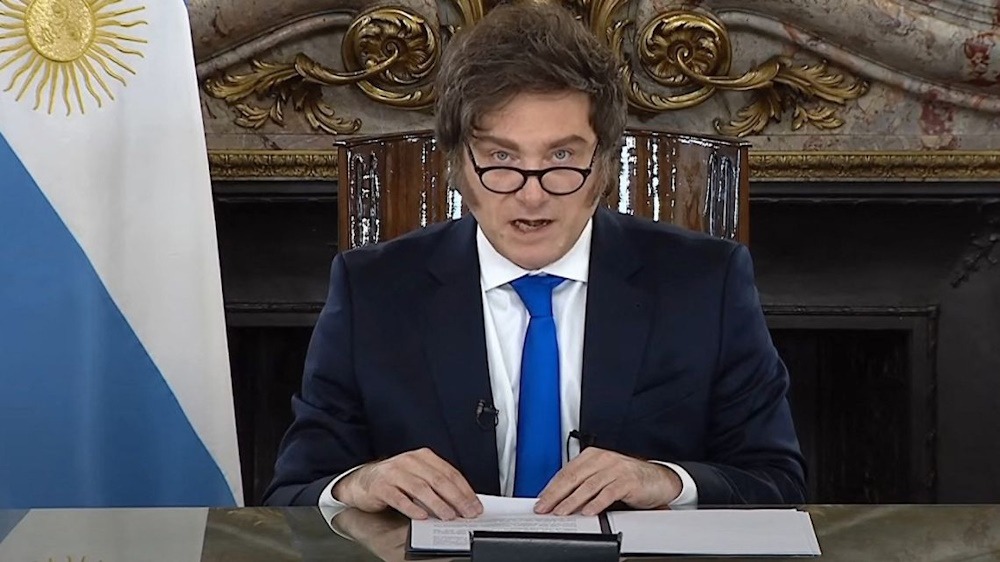
President Javier Milei’s forthcoming labor reform initiative is rekindling enduring conflicts between the nation’s banking institutions and its rapidly expanding financial technology platforms. In a notable shift, salaried employees may have the option to direct their paychecks into either a virtual wallet or a traditional bank account, as indicated by an informed source. At present, the legal framework in Argentina restricts the receipt of direct deposits exclusively to banks. The legislation may provide advantages to firms such as Mercado Pago, the payment service of the e-commerce leader MercadoLibre, whereas conventional banking institutions like Santander, BBVA, and Banco Galicia could face repercussions. The government is set to unveil its labour reform proposal on December 9, coinciding with the eve of the new Congress’s official commencement. Nevertheless, this has not deterred industry associations representing both banks and fintechs from releasing conflicting statements that critique one another.
The banks asserted that fintechs represent riskier options for paychecks and pensions, contending that these entities are subject to less oversight from Argentine regulators. According to the statement, diverting a larger share of payroll flows to digital wallets would drain stable funding from banks, limit their capacity to lend to companies and households, and elevate financial-stability risks. The fintech group asserted that banks were attempting to safeguard a “captive business,” rather than prioritizing the interests of savers. According to a statement, digital accounts are overseen by Argentina’s Central Bank, ensuring that 100 percent of user funds are held in accounts that are separate from company assets. Notably, there has never been an instance where a licensed payments provider has failed to return clients’ money. The Ministry of Deregulation and State Transformation, led by Milei and responsible for the ongoing reform initiatives, did not provide a response to a request for comment.
The ongoing dispute illustrates the wider tensions present throughout Latin America, where swiftly growing fintech companies are attempting to penetrate markets traditionally controlled by banks. In Mexico, numerous digital lenders are competing to obtain full banking licenses to provide payroll products. This contrasts with Argentina’s plan, which may allow digital wallets to receive salaries without the necessity of first entering the formal banking system. Should the measure receive approval, it is anticipated to reduce the deposit pool that banks in Argentina have depended on for many years, according to industry observers. Despite the fact that checking accounts in the country typically provide minimal to no interest on deposits, numerous fintech platforms are offering interest rates approximately at 25 percent, which is close to the prevailing inflation rate.
This is not the inaugural instance of the two parties engaging in confrontation. In recent years, banks have leveled accusations against Mercado Pago, citing “abusive conduct” in relation to QR payments. Months later, Mercado Pago asserted that banks were functioning as a “cartel.”