
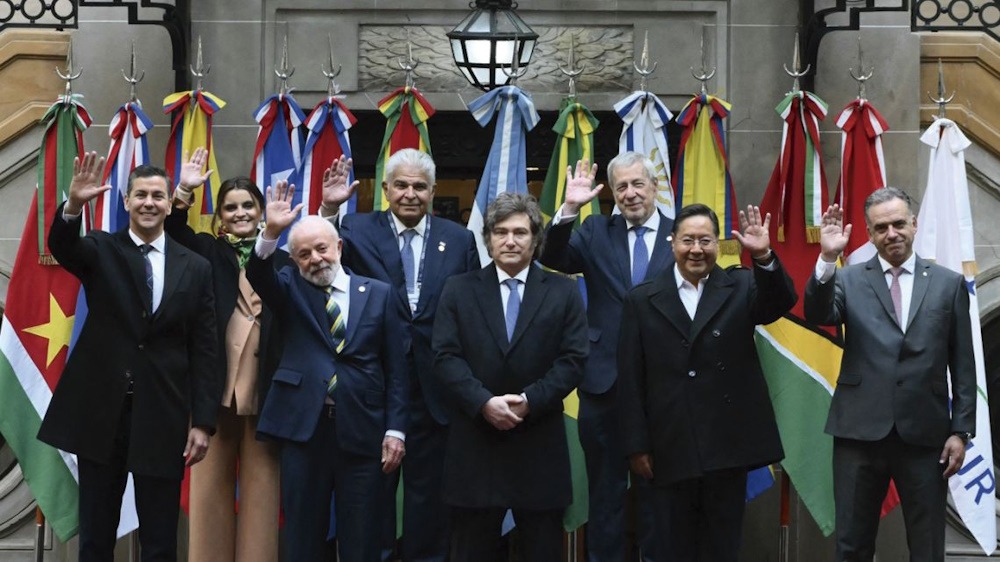
President Javier Milei is set to journey to Asunción, the capital of Paraguay, for the signing of the free-trade agreement between Mercosur and the European Union this Saturday, as reported by government sources. The European Union granted approval on January 9 for the long-anticipated trade agreement with the South American bloc, despite significant opposition spearheaded by France. After over 25 years of development, proponents regard the agreement as essential for enhancing exports, aiding the struggling economy of the continent, and strengthening diplomatic relationships amid a backdrop of global instability. A potential marketplace of over 700 million consumers is established.
Significant exports from Mercosur to the EU consist of agricultural products and minerals, whereas the EU is poised to export machinery, chemicals, and pharmaceuticals, benefiting from reduced tariffs. However, the agreement has elicited protests from farmers concerned about the potential for being undermined by an influx of inexpensive beef and other products from South America. The administration of President Milei asserts that the agreement will facilitate enhanced exports and attract new investment. Despite its initial reluctance regarding the agreement, the La Libertad Avanza administration has subsequently framed the signing of the deal as a notable accomplishment of its tenure.
Foreign Minister Pablo Quirno stated this week that “Argentina, led by President Javier Milei, is deciding to compete, produce and grow with clear rules and in liberty.” Quirno stated that the European Union “will eliminate tariffs on 92 percent of our exports and grant preferential access to a further 7.5 percent. In this way, 99 percent of Mercosur’s farm exports will stand to benefit,” he stated. “Argentina and Mercosur countries will have preferential access to the EU, the world’s third-largest economy, a market of 450 million people representing around 15 percent of global output,” stated Quirno. Former president Mauricio Macri, who vigorously advocated for the agreement during his tenure, hailed the “opening up an optimal phase for the region.”
The accord received support from the European Union and now requires ratification by Mercosur as well as the legislative bodies of each nation within the respective regional blocs. Milei is set to travel to Asunción alongside Quirno. On the day Paraguay assumes the pro-tempore presidency of the regional bloc, Santiago Peña, the nation’s leader, will preside over the ceremony. Reports indicate that the agreement will be executed by the foreign ministers of each country, rather than by the presidents. Yamandú Orsi, the president of Uruguay, has confirmed his attendance, with only the confirmation from Brazilian President Luiz Inácio Lula Da Silva still outstanding. The relationship between Milei and Lula is characterized by significant discord. Tensions have escalated significantly in the wake of the United States’ ousting of Venezuela’s Nicolás Maduro from power.