
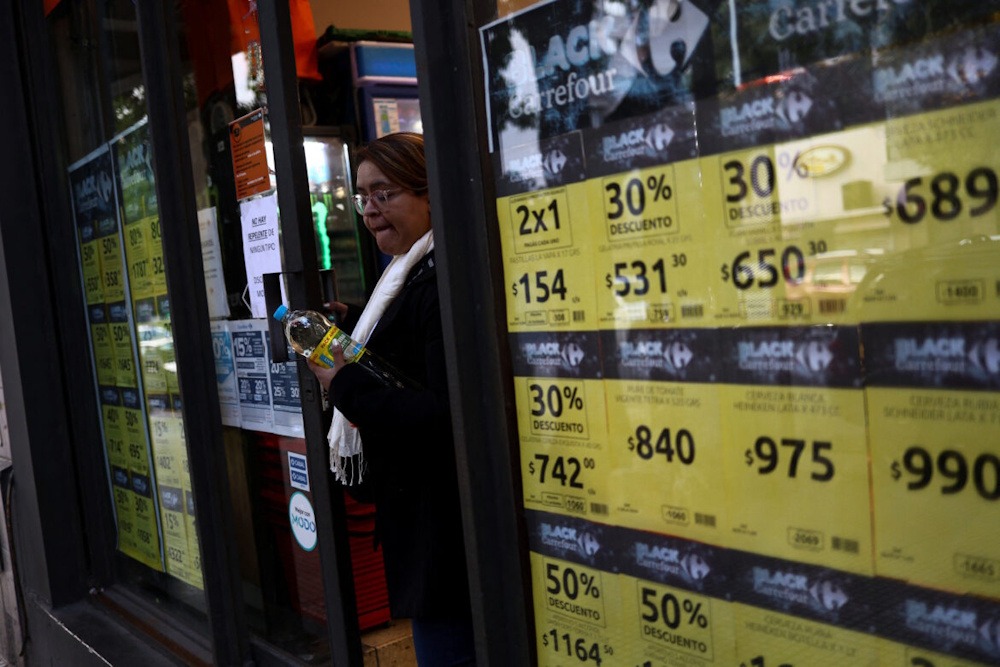
After the INDEC, the official statistics agency, released data indicating a 7.9% interannual growth in private consumption in 2025, government leaders rejoiced. Some private consulting firms, however, are presenting an other narrative. According to Scentia, mass consumption decreased by 2.1% in the first two months of 2026 and by 3.4% in February. According to a report published two weeks ago, “we believe that part of the explanation for this situation can be found in the inflation seen in recent months, which has eroded consumers’ purchasing power.” But since 2025, President Javier Milei, Minister of Economy Luis Caputo, and Minister of Deregulation Federico Sturzenegger have all stated that “consumption is at an all-time high.” This seeming contradiction, according to Sonia Balza, does not imply that the INDEC is fabricating statistics, but rather that the government’s interpretation of the numbers is out of step with reality.
“Service fees and transportation increased, but consumption did not. As a result, households spent more money,” Balza stated. “What we are witnessing is a decrease in mass-market goods consumption and an increase in household spending, but not because people are spending more,” she stated. “Instead, because they’ve changed how much they spend and there’s more pressure from services that you just can’t avoid paying for. One type of expenditure was substituted by another in Argentina,” she stated, referring to a “redistribution.” INDEC defines private consumption as “a macroeconomic aggregate derived from the national accounts.” Private consulting firms perform a “more straightforward and direct reconstruction of retail sales based on receipts,” she continued. Sociologist Pablo Semán, who studies working-class culture, claims that “families’ projects consist of, in the best case scenario, losing as little as possible” these days.
He continued by saying that different people have different techniques depending on their social level. For example, lower-class people “stopped eating four times a day, and started doing two,” while middle-class people buy more off-brand products or cut back on social gatherings. Semán told that, “People are losing things all the time: free time, the ability to get around because of the cost of transportation, the deterioration of safety conditions caused by the economic downturn, as well as social ties.” He continued “The fact that birthday celebrations are getting smaller and smaller is a telling example.”
At the time of publication, Milei appeared to acknowledge that things are not as good as he said in a post on X. He said that statistics indicate Argentina is doing better than it was in 2023, but he later clarified his claims. Does this imply that everyone is doing better? No. And to say otherwise would be intellectually dishonest,” he stated. To stabilize the economy and, consequently, the lives of all Argentines, we must endure. We appeal for patience because of this. We are headed in the right direction.