
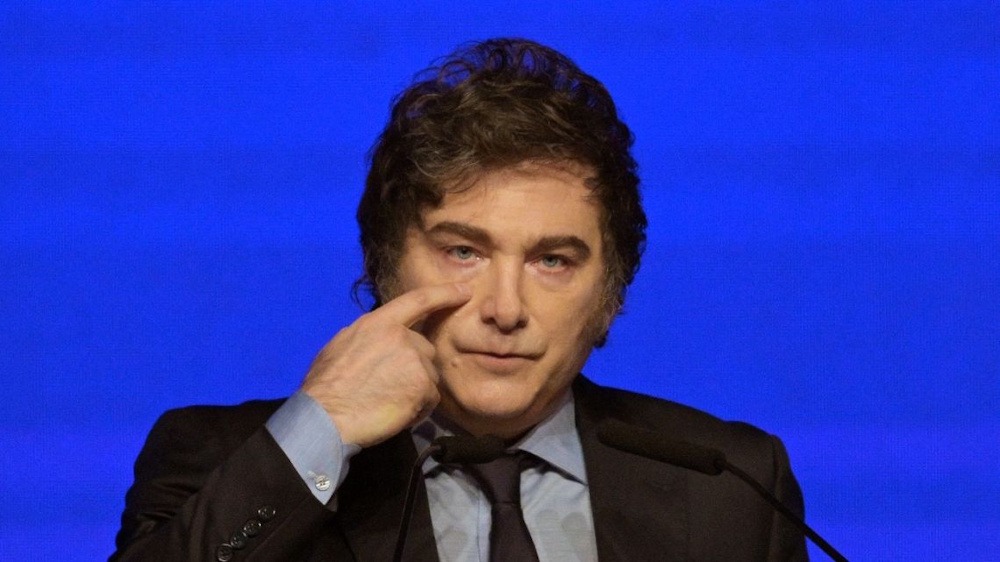
President Javier Milei’s administration achieved a significant legislative triumph in the Senate this week with the passage of his labour reform, a consistently contentious topic in the nation of Juan Domingo Perón. While the details surrounding the passage of the bill were quite intriguing, ultimately highlighted by the newly minted senator, former security minister Patricia Bullrich, the events that unfolded in the streets outside the Senate building were even more peculiar and reflect the “new way” in which politics is being conducted. Live television captured the violence and confrontations between protesters and police in a transmission that lasted multiple hours, attracting large audiences and generating hundreds, if not thousands, of short clips that later went viral on social media. Politics has become a spectacle, amplified and intensified by the attention-manipulating algorithms of the digital realm. As senators engaged in lengthy discussions over the specifics, streets that had been relatively peaceful transformed into a battleground. The number of protesters was relatively small; however, the level of violence captured by TV cameras and drones was notably elevated. Once the primary factions of the far-left parties that gathered at the Plaza de los Dos Congresos in downtown Buenos Aires had withdrawn, small clusters of coordinated vandals emerged as the focal point. A small “unit” equipped with helmets, gas masks, and face masks obscuring their identities utilized cardboard to establish a makeshift assembly line for Molotov cocktails near the front lines of police defense.
While assembling homemade explosives in full view of hundreds of policemen, an armoured water cannon truck hesitantly aimed at them, yet consistently failed to hit its target. Once the improvised device was ready, it landed just behind police lines, fortunately not igniting any individual police officer. The group swiftly withdrew, as another protester employed a hammer to dislodge blocks from the sidewalk, aiming to throw them at the police in an act of aggression. Another individual lowered his pants and stood exposed in front of the police. A spectacle for the multitude of cameras capturing and documenting the scene in real-time. Perfil’s photographers and journalists, possessing extensive experience at such events, were present on the scene. They reported the security forces’ behaviour as peculiar – especially considering their passiveness during the initial moments of the protests, followed by an increase in their own level of aggression a few hours later, as seemingly uncoordinated groups of individuals began to gather in the plaza. “They were hunting for perpetrators,” one of Perfil’s reporters explained, determining precisely who to assign responsibility for the protests. Some suggested that certain vandals may have been undercover agents, potentially affiliated with either the SIDE spy agency or the City Police Department responsible for the security operation. Some suggested that radicalised individuals within far-left parties acted independently, taking it upon themselves to pursue their agendas, while security forces permitted these actions in an effort to apprehend them in the act.
Whoever made the decision to escalate the violence, and for whatever motive, the Milei administration obtained the footage it required to portray their government and the labor reform as an essential measure in moving beyond Argentina’s regressive recent history, characterized by pickets, street protests, and poverty. Many viewers of government-friendly TV channels embraced the theory, while those aligned with the opposing political spectrum perceived it as a conspiracy theory. Disorder that provides every audience precisely what it requires to affirm and validate its own preconceptions. Inside the Senate chamber, Bullrich achieved a decisive victory with a significant majority that invigorates the government’s momentum. Following the approval of its 2026 Budget, the first under Javier Milei’s administration, the libertarians secured another legislative triumph with the backing of temporary allies such as Mauricio Macri’s PRO, a significant number of UCR Radicals, provincial governors, and centrist Peronists. Once again, Milei’s political arm successfully gathered votes through negotiations and concessions. Bullrich celebrated alongside Interior Ministry Diego ‘the Ginger’ Santilli, Cabinet Chief Manuel Adorni, ‘Lule’ Menem, Martín Menem, and Presidential Chief-of-Staff Sister Karina Milei. From their elevated balcony vantage point, the group looked down with disdain at Vice-President Victoria Villaruel, once an ally of Milei, now exiled from the libertarian paradise due to her ambition. The political maneuvers that the President disdains have once more provided his administration with political momentum, reminiscent of its initial year. Once again, they have an opportunity to maintain momentum, but the key is to keep the president’s comments (relatively) restrained to avoid provoking a conflict with its allies.
The labour reform stands as a significant component of the trifecta of structural reforms that Milei and Economy Minister Luis ‘Toto’ Caputo have negotiated with the International Monetary Fund; however, it is regarded as the least urgent among them. The IMF is anticipating support from libertarians for pension and tax reforms that could significantly influence the sustainability of Milei’s economic programme. Nonetheless, the labour reform encompasses a relaxation of collective bargaining regulations and a reduction in fees related to severance and redundancy payments, along with additional measures that the government anticipates will encourage the generation of private-sector employment. Although the market experienced an initial rally following the news, it remains uncertain if the labour reform package will provide sufficient incentives to stimulate new job creation. In a context marked by significant contraction across various labour-intensive sectors of the economy, the industrial sector stands out as the most crucial. The Milei administration has made it clear that it does not support industrial policy, viewing it as opposed to the principles of a free market. Since its early days in office, the administration has engaged in confrontations with the industrial sector, exemplified by the President’s admonitions to industry leaders to enhance their competitiveness without state assistance, all while expressing praise for the agricultural sector.
The President’s criticisms of Paolo Rocca, the billionaire at the helm of Techint and the nation’s largest employer, align with the ideological belief in a completely open economy, facilitating the operation of Adam Smith’s invisible hand. In a world that is increasingly leaning towards protectionism, particularly under the leadership of Donald Trump’s United States – with which Argentina has entered into a free-trade agreement containing several contentious clauses – it is challenging to envision how the Argentine industrial sector can genuinely compete on a global scale. One of the primary factors is the high tax burden, along with labour costs, which could be alleviated through the reform. The UIA industry group, which represents the industrial sector and is led by Martín Rapallini, yet remains under the close oversight of Techint, is urging the Milei administration to reduce costs to “balance the playing field.” It is challenging to envision that their appeals will be acknowledged. Whether it’s through industrial policy or genuine economic growth that sparks service-sector jobs (as Milei has indicated during the campaign), the Argentine economy is confronting a critical situation, with salaries lagging behind inflation, stagnation in private-sector job supply, and a persistently expanding informal sector. Reflecting on the violent protests outside Congress, there are numerous predictions regarding the potential downfall of the Milei administration, particularly from hardliners in the opposition aligned with Kirchnerism. That appears improbable, yet it is reasonable to scrutinize the extent of social tolerance regarding the economic hardships faced by a significant portion of Argentines. Despite a decrease in inflation, it continues to be elevated. This situation persists even after Milei and Caputo facilitated the exit of Marco Lavagna, the head of the INDEC national statistics bureau, who was focused on revising the methodology for Argentina’s consumer price index. The government’s economic policy path raises a significant question regarding its potential to enhance welfare for the majority of the population.
Potential comparisons can be drawn with the 2001 flare-ups that culminated in the end of Fernándo De La Rúa’s government, plunging Argentina into a profound socio-economic-political crisis. Or the 2017 protests outside Congress when Macri, freshly off a decisive victory in midterm elections, passed a pension reform that a significant segment of society perceived as unjust towards retirees. There appears to be a notable shift this time around. Milei confirmed his social mandate in last year’s midterms and has now adeptly utilized his newly acquired legislative power to enact significant legislation. Opinion polls reveal that Milei enjoys significant approval ratings, with a considerable segment of the population acknowledging the necessity for structural reforms. In an interview with Modo Fontevecchia, political analyst Manuel Zunino articulated that the key factors driving support for Milei are the perception of his determination and the hope for the future. Even amidst ongoing corruption scandals, ranging from the ANDIS national disability agency to the ‘$LIBRA’ crypto-scandal and further. If at any moment, Milei ceases to be viewed by the majority as a beacon of hope for the future, the circumstances on the streets could swiftly change, and what were merely isolated incidents of violence on Wednesday could escalate into something far more severe. For now, the Casa Rosada may continue to envision hegemony, but eventually, they must awaken and revitalize the economy.