
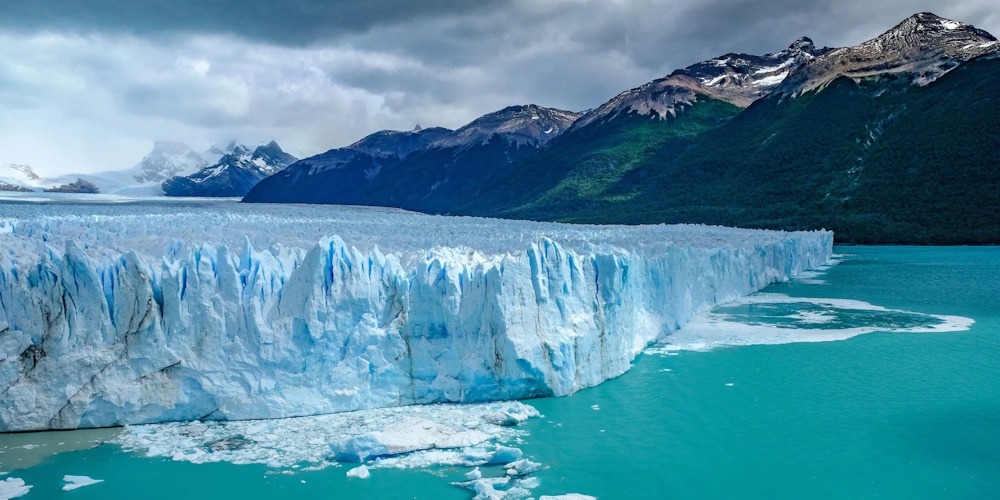
The government has introduced a bill in the Senate designed to amend existing legislation that safeguards glaciers, with the intention of easing restrictions that presently prohibit mining activities within these ice formations and their adjacent regions. The legislation is included in the government’s agenda for discussion in Congress during the extraordinary sessions that commenced last week and are scheduled to continue until December 30. Enacted in 2010, the legislation delineates the definitions of glaciers and periglacial regions, which refer to segments of frozen mountainous terrain that do not strictly qualify as glaciers and may thaw based on seasonal variations. Current legislation prohibits mining activities in both glacial regions and periglacial zones. The government’s bill suggests granting provinces the authority to determine the scope of these protected areas and to make decisions regarding the permissibility of mining activities within them.
The government asserts that the existing legislation has generated “uncertainties” concerning the scope of the periglacial regions. An introductory text included in the bill stated that its objective is to “make contributions in order to solve the interpretative controversies caused by the current legal text,” as well as to “fortify” the attributions of the provinces regarding environmental protection and management of natural resources. Argentine legislation designates the management and development of natural resources as responsibilities of the provinces, albeit subject to constraints imposed by specific national laws, including this one. The legislation has received support from the administrations of Catamarca, Jujuy, Salta, Mendoza, and San Juan — regions abundant in minerals including lithium and copper. In a note, they stated that the legislation designed to safeguard glaciers presents challenges that impede the objective of “promoting a sustainable economic development of the provinces and the Nation without compromising future generations.”
The reform of the law aims to establish “clear rules,” according to a statement issued by the presidential communications office. The objective is to safeguard glaciers, enhance current environmental regulations, and “eliminate the discretionary considerations that, under ideological pretexts, have obstructed the nation’s economic progress,” it stated. The government aims to implement a significant alteration by removing restrictions that currently inhibit specific activities in periglacial regions. The existing legislation prohibits the application of contaminating chemicals in glacial and periglacial regions, which are frequently utilized in mining activities. The legislation also prohibits exploration and development activities related to mining and fossil fuels in these regions and restricts any construction or industrial operations that might impact the integrity of the ice structure or the quality of the water.
The proposed bill indicates that such prohibitions will apply solely to glaciers, clarifying that those activities will be prohibited only if they seek to modify the glacial structure “considerably.” The project further asserts that safeguarding the environment in these regions must align with the legal frameworks governing provincial rights over natural resources, as well as a provision in the national constitution which stipulates that economic activities should “satisfy present needs without compromising future generations.” The new bill introduces a provision permitting authorities to remove periglacial areas from their registry of protected sites should they conclude that these areas do not meet the legal definition of water sources. This indicates that economic activities, including mining, would be permissible within these areas, while still adhering to established environmental regulations. The government anticipates that, in addition to the amendment of the law safeguarding glaciers, lawmakers will engage in discussions regarding other significant measures, including the 2026 budget and substantial reforms pertaining to labor, taxation, and criminal legislation during the extraordinary congressional sessions.