
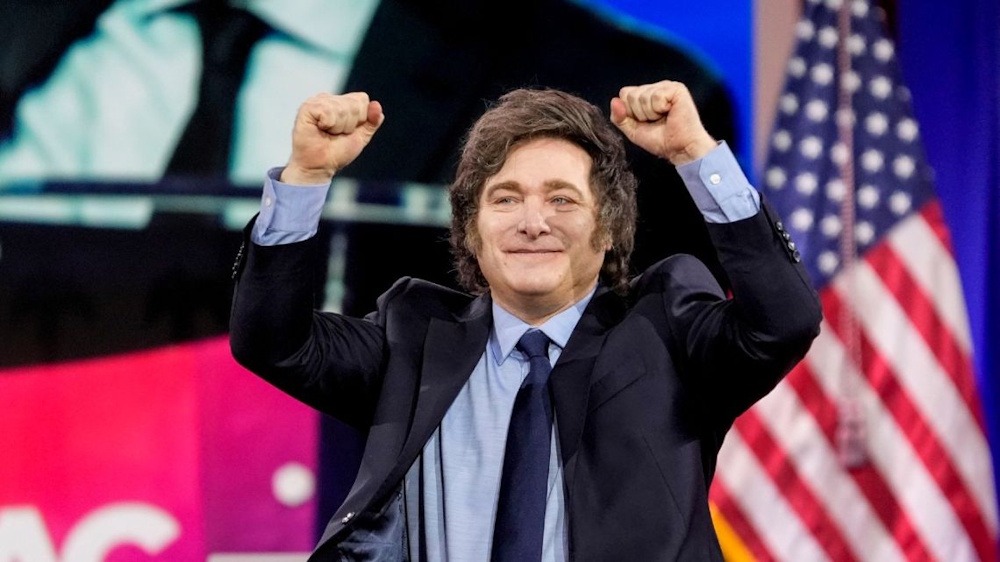
President Javier Milei is poised to initiate a bold reform agenda for Argentina’s economy as a more cooperative Congress assumes its duties on Wednesday. Investors anticipate that this may merely be the preliminary phase of a more significant shift: the removal of the stringent currency controls that characterized his initial two years in office. Milei’s party surpassed projections in the October congressional elections, transforming a modest delegation into the largest caucus in the lower house and securing nearly a third of the Senate seats. The victory, significantly aided by Donald Trump, has positioned him to implement major labor and tax reforms that both Milei and the markets identify as crucial for stimulating growth and revitalizing Argentina’s struggling economy. Bonds and stocks have experienced a rally fueled by optimism following the vote, with Economy Minister Luis Caputo announcing last week the government’s intention to issue a local law bond in dollars, marking the first test of demand for the nation’s debt in years. Argentina presently permits the currency to fluctuate within a defined range, a strategy that has contributed to maintaining inflation at manageable levels. However, analysts indicate that it has also resulted in a peso that is overvalued, which is exerting pressure on the economy. “To trigger a boom in investments, the market says you need to scrap the currency band system and let the currency float,” stated Ramiro Blazquez. “Or at a minimum, expand the bands considerably.”
Milei’s administration is set to present its labor and tax proposals on Tuesday, forming a component of a broader reform package. This initiative represents the subsequent phase in his “shock therapy” approach, aimed at reversing the long-standing decline of the economy. His objective is to enhance competitiveness through the liberalization of labor laws, followed by a reduction in taxes applicable to a broader workforce. The initiative aims to facilitate the hiring and termination of employees, in part by limiting their capacity to litigate against employers upon dismissal. The initiative aims to integrate a significant portion of the 42 percent of informal laborers into the formal employment sector. The government’s 2026 budget proposal, coupled with the package, will function as a preliminary assessment of Milei’s attempts to capitalize on the renewed opportunity granted by Argentine voters in the elections. The assertive leader has since endeavored to forge alliances that may assist him in circumventing the traps that have led to the downfall of past reform-oriented presidents. New Interior Minister Diego Santilli, a seasoned political figure with a history of navigating various political parties, has recently engaged with nearly every provincial governor in an effort to win over local leaders who wield considerable influence in Congress. Milei’s party currently occupies 95 seats in the lower house, which is 34 seats shy of achieving a majority, following the inclusion of moderate lawmakers. The PRO party, closely aligned with former president Mauricio Macri and various factions, stands a viable opportunity to garner the necessary votes for legislative passage. The entity currently occupies 20 of the 72 Senate seats, yet a majority is attainable through strategic alliances with other parties.
Milei has reduced export taxes on conventional oil, responding to governors who have advocated for a relaxation of fiscal constraints to benefit their provinces. The government announced a reduction in tariffs on soybeans, corn, and wheat on Tuesday. This has fostered optimism regarding Milei, who faced challenges from governors after lawmakers annulled his vetoes earlier this year, in his ability to fulfill his legislative agenda. Analysts from JPMorgan Chase & Co forecasted post-election that Milei would secure approval for the budget along with labor and tax reforms. Discussions regarding the labor reform are expected to commence as early as February, as indicated by legislators familiar with the proposals. Even opponents of Peronism, such as José Miguel Ángel Mayans, the leader of the caucus in the Senate, concede that he is probably poised to achieve a degree of consensus regarding labor reforms. The pressure on the peso, however, continues to escalate. The depreciation of the currency has prompted Argentines to cross the border for shopping, simultaneously fueling an increase in imports. The situation has complicated the efforts of Argentina’s Central Bank to replenish the foreign reserves essential for addressing impending debt obligations. Blazquez contended that it also undermines the capacity of private companies to repatriate dividends, a persistent concern. The International Monetary Fund, which intervened to assist Argentina with a new US$20-billion aid programme last year, has also been advocating for a transition. Last week, IMF spokeswoman Julie Kozack encouraged Milei to capitalize on this “window of opportunity” to implement exchange-rate and monetary policies that more effectively facilitate the accumulation of foreign reserves, noting that it would be “challenging” for Argentina to achieve the year-end targets that the Washington-based lender has already eased.
At present, Milei is experiencing considerable success. However, critics are highlighting the peso policy to challenge his dedication to lowering unemployment, a primary concern for Argentines, as indicated by recent surveys. “I reside along the boundary with Paraguay,” stated Mayans. “Every weekend represents a significant movement.” The country exhibits high costs of living alongside relatively low wage levels. Such an issue will remain unresolved, regardless of achieving unanimity in Congress.