
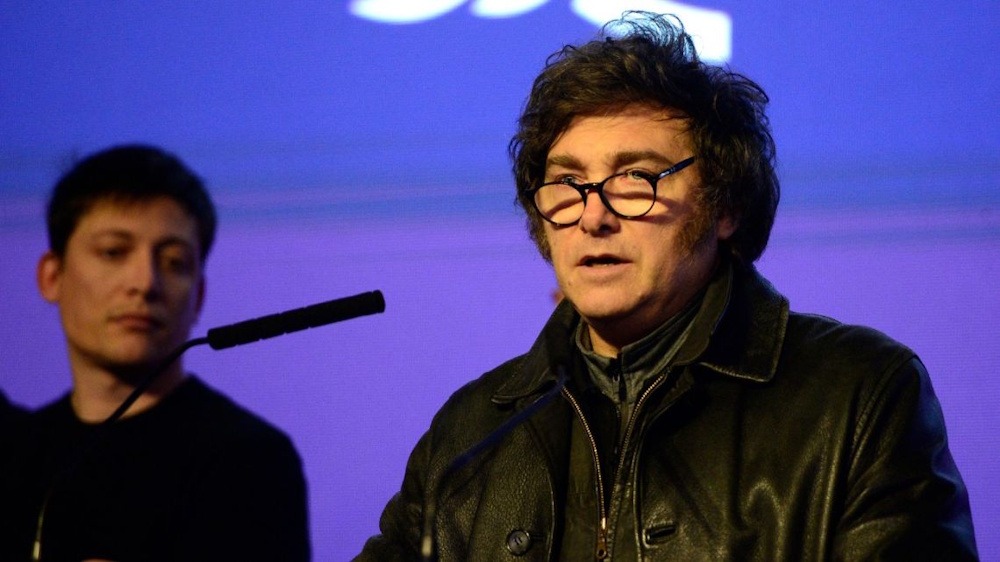
As the Javier Milei administration starts to leverage its newly acquired legislative power, Argentina is further entrenching the divisions of the latest phase of ‘la grieta,’ the nation’s distinctive form of political polarization. Although this should not be regarded as a mere curiosity, it starts to illuminate the emerging relative distribution of power that will characterize the final two years of the anarcho-capitalist libertarian experiment in governance. While proponents and opponents of the labour reform debate seek to substantiate their positions through the merits or drawbacks of the bill, it ultimately becomes evident that the entirety of the socio-political landscape has aligned itself around the pivotal figure in this scenario: President Milei. Interestingly, this is occurring at a moment when the wild-haired economist finds himself at a zenith of power, facing no significant adversaries, while he remains distant from the domestic oratory spotlight, engaging on social media and traveling abroad to participate in yet another event alongside US President Donald Trump. Milei has already confronted the precipice after severing ties with every conceivable ally and advancing his economic model to its extremes, only to receive an economic reprieve from the United States and subsequently a political lifeline from the electorate that granted him a second opportunity. The implications of his strategy for political dominance are exceedingly significant.
Currently, it appears that Milei has successfully overshadowed the previous two focal points of the political landscape: Cristina Fernández de Kirchner and Mauricio Macri. The former has gradually experienced a decline in her centrality, a circumstance intensified by her confinement under house arrest following a conviction for corruption. Buenos Aires Province Governor Axel Kicillof is striving to assert dominance over the more confrontational faction of the Partido Justicialista, the principal Peronist party, while Argentina’s provincial governors engage in their own strategic maneuvers. Sergio Massa, the head of the Frente Renovador and the last presidential candidate for the pan-Peronist coalition, appears to be absent from the current political landscape. There are discussions surrounding Peronism in search of a potential outsider, with the name of evangelical pastor Dante Gebel being circulated. This is evidenced by the proliferation of street art featuring his name in Buenos Aires. However, the identity of his backers remains unclear, with speculation often pointing towards Massa. Ultimately, the Peronists, once a formidable political force, appear to struggle in formulating an effective counter to Milei, despite the prevailing conditions of a severe recession, ongoing declines in purchasing power, and increasing unemployment rates.
In a notable turn of events, Macri has faced significant humiliation at the hands of President Milei and Presidential Chief-of-Staff Karina Milei, who have successfully consolidated PRO’s legislative power. Furthermore, the individuals comprising the presidential ticket introduced by the coalition spearheaded by Macri in 2023 – Patricia Bullrich and Luis Petri – have emerged as pivotal figures within the libertarian power framework. Additionally, the significant ministerial roles occupied by PRO alumni Luis ‘Toto’ Caputo and Federico Sturzenegger cannot be overlooked. Despite some grievances from Macri’s associates, notably national deputy Cristian Ritondo—especially concerning the potential for salary disbursements via fintech platforms—PRO has largely extended its unwavering backing to the initiatives proposed by La Libertad Avanza. The speculation suggests that they are in search of an external candidate, with indications pointing towards MercadoLibre founder Marcos Galperín as a leading contender. This may elucidate the focus on the necessity of dismantling the banks’ monopoly on wages, although it remains merely speculative at this juncture. The political momentum achieved by the Milei administration has enabled it to initiate the passage of legislation in Congress, beginning with the 2026 Budget (the first “bill of bills” approved in three years), the push for labor reform, and a proposal to lower the age of criminal accountability from 16 to 14. The sequence of events unfolded following the unexpected and decisive triumph in the previous year’s midterm elections, which occurred after the government was initially unsettled by Kicillof’s robust performance in the local elections of Buenos Aires Province. Additionally, there was a bailout from the United States, alongside a ‘back to basics’ campaigning strategy for Milei, which included a rock concert and his direct involvement in the communications strategy.
However, the President has since adopted a more subdued approach, reducing his media engagements and softening the tone of his social media communications, while also dedicating considerable time abroad, often alongside Trump. The political faction has assumed control, with Sister Karina allegedly at the helm alongside Cabinet Chief Manuel Adorni. It appears that the individuals who have truly assumed control are the more conventional politicians, the historical members of “the caste” that Milei has expressed disdain for – the recently appointed Senator Bullrich and Interior Minister Diego ‘Ginger’ Santilli, another former PRO figure. Shortly after the President announced the demise of Niccolo Machiavelli and the principles of political strategy, his administration is navigating a sequence of significant political victories that afford him both leeway and legitimacy, both at home and on the international stage – especially with the International Monetary Fund. Accelerating a labor reform bill through Congress presents challenges, including the risk of overlooking specific “mistakes,” exemplified by the controversial “Article 44” concerning medical paid leave, which was ultimately removed. The discussion in the lower house Chamber of Deputies featured numerous potential circumstantial allies presenting contentious arguments and inquiring whether their Senate counterparts had thoroughly reviewed the text. The abrupt cessation of operations by the 80-year-old domestic tyre manufacturer Fate aligns with the legislative developments, thereby subjecting Milei and Caputo’s economic strategy to increased examination. In response, the CGT umbrella union grouping seized the opportunity to orchestrate a national strike of considerable magnitude, while incidents of violence in the plaza outside Congress highlight the potential for social unrest amid ongoing company closures and job losses.
Although the specifics of the bill are significant, it is unlikely to provide a conclusive remedy for Argentina’s longstanding issue of economic decline. Macroeconomic growth that fails to include a significant portion of the population in its benefits will not be sustainable. The President is required to advance his agenda of structural reforms, encompassing tax and pension initiatives that are certain to incite vigorous debate and increased social tension. However, the recent enactment of several bills indicates a renewed effort towards pragmatic negotiation aimed at achieving political consensus, a significant challenge during the initial two years in office. If those negotiations could initiate the foundation for building political majorities to endorse a range of significant national issues that can rise above the current political inclination towards polarization, then there may be an opportunity to capitalize on this potential. Yet, entrenched in our new iteration of ‘la grieta,’ a polarization that constitutes a component of the government’s political and electoral strategy, it appears that the political ecosystem is considerably distant from achieving consensus to revitalize the country. Milei will, at the appropriate moment, resume his discourse.