
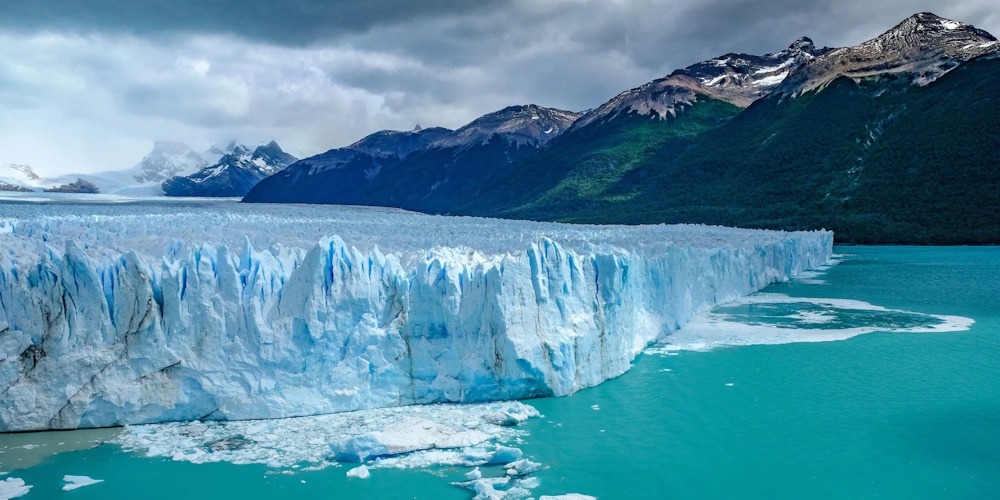
Argentina’s Congress has enacted legislation that relaxes protections for glacial formations, a development anticipated by major mining companies with significant projects awaiting approval, despite warnings from environmentalists regarding the potential consequences. Legislators sanctioned the amendments early Thursday with a vote tally of 137-111, following the Senate’s endorsement in late February. The approval represents a further triumph for President Javier Milei’s pro-business legislative agenda, following the successful passage of a labor reform earlier this year. Nonetheless, the timeline for a congressional vote remains ambiguous regarding other reforms, including a trade agreement between the US and Argentina or a tax overhaul. In relation to the glacier law, initiatives such as BHP Group’s Vicuña joint venture and Glencore Plc’s El Pachón are under scrutiny, with a total projected capital expenditure approximating US$28 billion.
These projects and others have already submitted applications to Milei’s RIGI programme, which offers tax incentives and legal assurances that significantly enhance the financial viability of mining initiatives in Argentina. The pivotal reform, advocated by miners, empowers provincial governors to determine if a glacier or permafrost formation constitutes a critical source of downstream water. If the provinces determine they are not, miners may take advantage of them. In the past, a multitude of glacial formations were afforded comprehensive protections through a federal inventory, which has now been effectively undermined following the congressional vote. Miners contended that certain formations on their properties do not serve as essential water sources for population centers and agricultural activities; however, they are nonetheless federally designated, thereby creating a legal liability.
Critics argue that the provinces housing the majority of Argentina’s copper reserves are predominantly supportive of mining activities, suggesting that they will readily permit any environmental harm to glaciers that could obstruct corporate interests. “This law will end up in practice no longer as a protection but as a tool at the service of mega miners,” stated Caren Tepp. “They will approach the provinces, indicate their preferred mining locations, and subsequently fund any scientific studies that provincial officials require to substantiate a decision to facilitate the process.” Conversely, Flavia Royón expressed strong support for the notion that governors are ideally situated to determine which glaciers play a role in water supply contributions. “We must transition from a mindset of rigid prohibition to one that emphasizes the essential protection of what genuinely requires safeguarding,” Royon stated.
Milei, perceiving copper as a significant opportunity for investment and employment, articulated the changes in a speech late last year, asserting that “once and for all” they would enable Argentines to “start taking advantage of our natural wealth.” Christopher Ecclestone stated “The pivoting to Argentina is massive.” And “Top-tier copper resources are depleting; it is the second tier that holds significance now, and Argentina has secured a dominant position in that market.”