
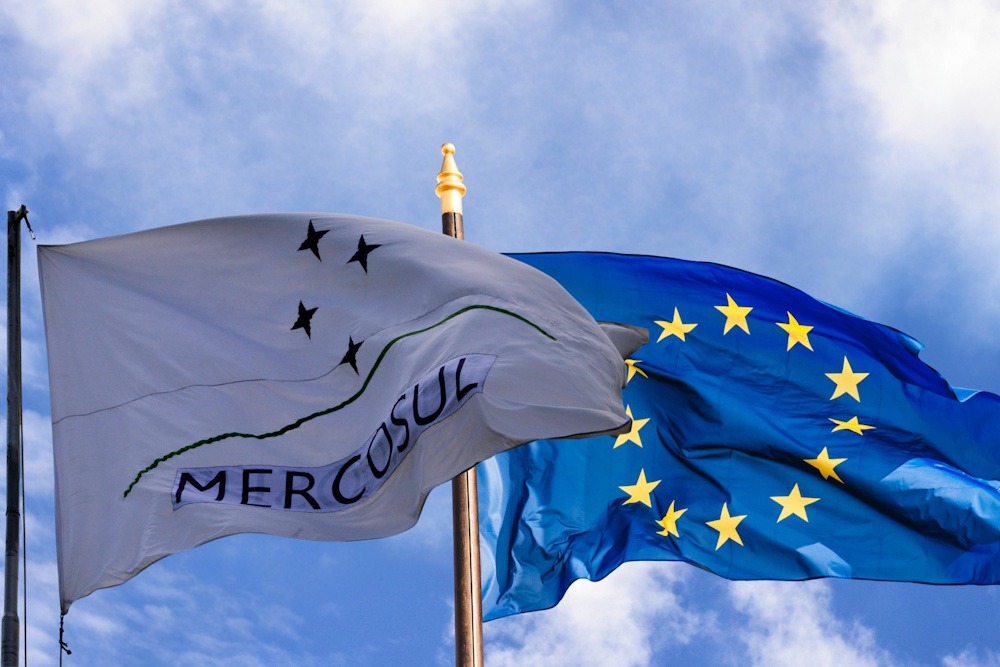
The Mercosur-EU trade agreement is on the verge of realization after more than 25 years of negotiations, having received the endorsement of a majority of European Union member states. The agreement, set to be finalized on Monday and subsequently requiring approval from the European Parliament to take effect, is poised to play a crucial role in Argentina’s export dynamics. One Argentine official characterized it to the Herald as a “route map to modernization.” Nonetheless, detractors express concern that imports from Europe may adversely affect domestic industry. The trade accord is set to enable Argentina and its fellow Mercosur members — Brazil, Paraguay, and Uruguay — to broaden their export markets, particularly benefiting the vital agricultural sector. It will facilitate improved access to manufactured goods and technology from Europe, which are comparatively underdeveloped in South America, with the exception of specific industries, such as Brazil’s automobile sector. “For Mercosur, this is far more than a trade deal between blocs: it’s a strategic long-term decision,” stated Fulvio Pompeo. “It enables the nations of the region to establish themselves as significant collaborators in the global economy, linked to one of the most vital economic zones worldwide, characterized by explicit regulations, quality benchmarks, and collective obligations.”
European nations with a focus on manufacturing, such as Germany, have expressed support for the deal, whereas those with robust agricultural industries, including France, have voiced opposition, contending that inexpensive products from South America could adversely impact local farmers. Brazil has taken the lead in negotiations, although Argentina has occasionally expressed opposition. Historically, Peronist administrations contended that the stipulations set by Europe rendered the agreement unbalanced. In December 2023, during Alberto Fernández’s administration, former Argentine Foreign Minister and current lawmaker Santiago Cafiero remarked that adherence to the EU’s conditions would constrain Argentina’s exports and exacerbate the productive, financial, and technological divide between the two regions. While expressing skepticism regarding the operational effectiveness of Mercosur, the current Argentine President Javier Milei has nonetheless endorsed the agreement. “The timeframe for economic opportunity is always short, and it cannot be subordinated to the eternity of bureaucracy and politics,” he stated at the most recent Mercosur summit in December. “MORE GOOD NEWS,” he posted on X following the greenlighting of the agreement in Brussels, sharing a message from Argentina’s Foreign Minister Pablo Quirno regarding the approval.
“The most important thing is that we will have adaptable regulations concerning sanitary, environmental, and social aspects. Signing this agreement guarantees a preferential position for us,” stated Gustavo Idígoras. Idígoras contended that the European agricultural industry is facing “a process of reduction or extinction in upcoming years,” and further noted that the deal would consequently promote investment in South American agriculture. “Europe’s food industry must view the Mercosur as a key destination for their investment and the advancement of their production capabilities.” Andrea Sosa provided insights regarding the agreement. She indicated that the deal is advantageous for the governments of the Mercosur states, as they “need to generate foreign currency earnings,” which explains Brazil’s strong push for the deal’s ratification. “It will open up more markets and allow a ‘invasion’ of products from Argentina and the Mercosur in European markets, which could create more exports and more foreign currency income,” Sosa stated. “This is precisely the reason some EU nations are declining it.” She cautioned that the agreement might lead to increased prices at supermarkets, butchers, and greengrocers in Argentina, as the potential for selling to profitable European markets could elevate local prices due to competition between Argentine and European consumers for products. “The markets will invariably sell to the highest bidder,” she stated. Ricardo Carciofi anticipated that the agreement would produce a contrary impact on consumer prices. “An expansion of the import basket and increased competition on the offer side can be anticipated,” he stated. “As commercial channels consolidate, we would observe downward pressure.” Pompeo, the international relations secretary of the capital, concurred. He stated that the agreement fostered competition and stability, noting that “closed economies generate less offer and higher prices.” Critics contend that the agreement will adversely affect Argentine manufacturing, as it will become more cost-effective to import those goods from Europe rather than producing them domestically. Concurrently, the agreement is poised to enhance the agricultural sector, reinforcing a trend where the nation predominantly exports primary goods while relying on developed countries for manufactured products, thereby stifling the growth of local industries.
Argentina has historically been characterized by a robust agricultural sector, and despite previous efforts to cultivate a manufacturing industry, it has yet to flourish. Unrestricted imports have historically inflicted significant damage on domestic industries. “It means that the European Union will sell us manufactured goods and we will sell them primary products,” stated Eric Calcagno during an interview. “It represents a colonial relationship.” Calcagno asserts that the agreement aligns with Milei’s agenda of “destroying Argentine industrial development and sustainable and family agriculture.” “Unlimited imports of foreign products with an overvalued exchange rate: that is an incentive for imports and a punishment for exports,” Calcagno stated. Idígoras informed the Herald that the agreement is unlikely to adversely affect Argentine manufacturing sectors, as the import duties on European products included in the deal “will take 10 years to be lowered.” This will provide the local industry with an opportunity to compete against EU countries, which are characterized by elevated production and commercialization costs, he stated. “The only sector that could have been affected was the automotive industry, but there have been agreements with Europe in this sense, so there should not be any negative impact,” he stated. The agreement may enhance Argentina’s knowledge economy and service exports, given the nation’s established foothold in various sectors, including creative industries, IT, and healthcare, as noted by Carciofi. In this context, he remarked, “interesting prospects are opening up for the relationship between the two regions.”