
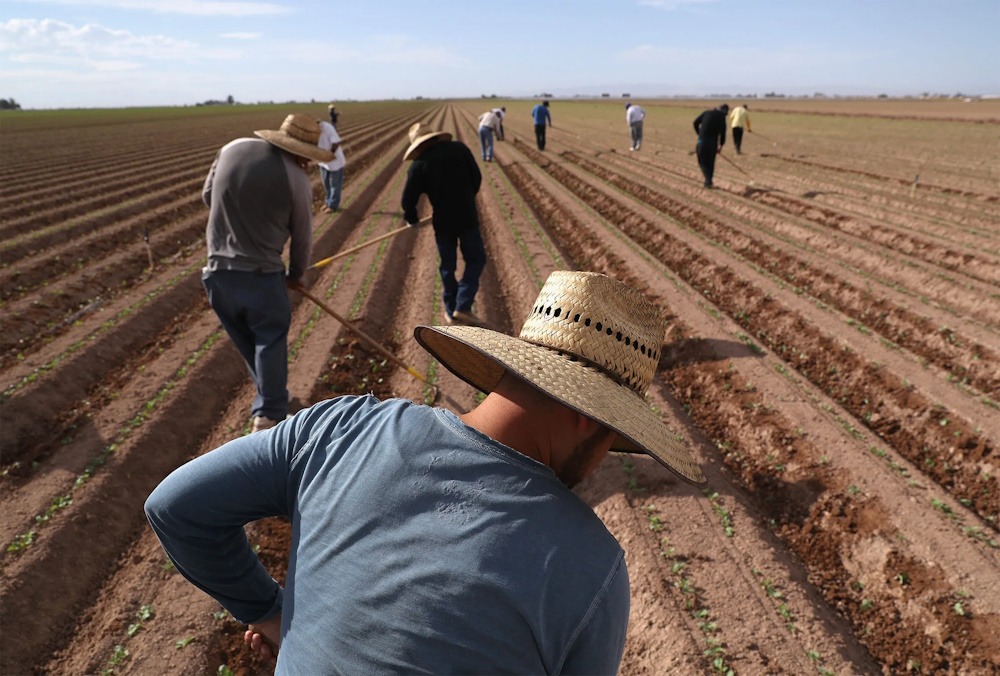
Two prominent banks in Argentina are aiming to expand credit availability for farmers as President Javier Milei dismantles economic obstacles, notably by reducing export tariffs for agricultural producers. The local subsidiary of Spanish banking powerhouse Banco Santander and Argentina’s largest private financial institution, Grupo Financiero Galicia, are broadening their collaboration – known as Nera – which provides lending solutions to agricultural producers as well as suppliers of seeds, fertilizers, and pesticides such as Syngenta and Corteva. Nera is forecasting credit lines of US$1.5 billion in 2026, representing a 36% increase from the anticipated figure for this year. Galicia established the company in 2023. By that time, Argentine farmers had faced significant challenges due to prolonged government interference in the sector, while their competitors in Brazil were advancing rapidly. However, Milei, a libertarian economist, ascended to power shortly thereafter and has been implementing extensive economic reforms over the past two years.
On Friday, Milei implemented a comprehensive reduction in tariffs imposed on agricultural exporters, a decision regarded as a pivotal step to stimulate investment and production in the Pampas rural region. “Farmers have been in survival mode,” stated Marcos Herbin during an interview. “Freeing everything up provides a different canvas; they switch from survival to investing in technology” such as gene-edited seeds and agrochemicals. Earlier this year, Galicia divested a 50-percent stake in Nera to Santander. Herbin, a veteran from Galicia with roots in an agricultural town, anticipates that by the conclusion of 2025, he will have facilitated US$1.1 billion in financing for thousands of farmers, which represents a doubling of the amount achieved in 2024. This projection comes despite the fact that the previous year’s figures were diminished as growers capitalized on exchange-rate arbitrage opportunities in 2023 to acquire inputs.
In a nation characterized by persistent crises that have constrained economic potential, the CEO anticipates increased growth in the coming year, as soybean and maize planting is already advancing favorably in preparation for the 2026 harvest. Argentina’s agricultural frontier is already at its limits, indicating that the majority of production increases will stem from investments aimed at enhancing the yield of current acreage. Herbin posits that should the government eliminate export tariffs, thereby returning funds to farmers for investment in improved technology packages, harvests could potentially increase by 40 percent without necessitating an expansion of planting area. The current wheat crop is on track to achieve a record yield. Good weather this year has indeed benefited plant growth; however, the Rosario Board of Trade emphasized on Thursday “the investment that farmers have made in technology, especially in seeds, disease control, and fertilisation” as a significant contributing factor.
Export tariffs, often viewed unfavorably by policymakers globally, have significantly influenced Argentine history. Most recently, they were imposed at the turn of this century during the country’s severe crisis of 2001-2002, and subsequently maintained to finance expansive government budgets, generating billions of dollars in annual revenue. They remained resilient, and Argentina’s crop industry navigated the prevailing challenges. Milei is attempting to alter that situation. However, he requires the revenue at this juncture to achieve the ambitious fiscal objectives that have captivated Wall Street. Friday’s reductions amounted to merely one or two percentage points. The rate for soybean meal and oil, with Argentina being the leading exporter of both, currently stands at 22.5 percent, a decline from 31 percent at the time he assumed office. Milei is additionally strategizing a comprehensive tax and labor reform aimed at reducing expenses for businesses. “If the government lowers the tax burden, investment in crops can jump from US$16 billion a year to US$22 billion,” Herbin predicted. “Increased investment translates to greater financial resources – presenting a significant opportunity.”