
“The world is no longer the same” since February 28, when the United States and Israel launched coordinated surprise airstrikes on Iran, acknowledges Tehran’s leading diplomat in Buenos Aires. In an exclusive interview with Perfil, Mohsen Soltani Tehrani, Iranian chargé d’affaires in Buenos Aires, emphasizes what he characterizes as the “historic” nature of the Islamic Republic’s counter-offensive against Israel and the US, which he refers to as the possessor of “the most powerful and feared army” in the world. “It is more than mere resistance to a brutal aggression. “It is a hugely important military achievement,” argues Soltani. The Iranian diplomat, who holds the position of the highest-ranking official in Argentina due to a significantly diminished bilateral relationship, has leveled accusations against the US and Israel, claiming they have engaged in “brutal aggression” that contravenes international law. Two weeks later, with the government of the Islamic Republic remaining intact, significant Iranian retaliation, and the closure of the Strait of Hormuz, the diplomat indicates that Tehran will not engage in ceasefire negotiations without preconditions. The discussion also examined the ramifications of the conflict on Argentina and its relations with Iran. Soltani minimized remarks made by President Javier Milei, who recently characterized Iran as a “enemy” and proclaimed himself as “the most Zionist president in the world.” He also reiterated Tehran’s denial of any involvement in the 1994 bombing of the AMIA Jewish community centre, which remains Argentina’s most devastating terrorist attack.
This constitutes a severe act of aggression that contravenes established international norms and the United Nations’ Charter, occurring concurrently with negotiations involving the United States regarding Iran’s nuclear program. This marks the second occurrence of such an event, indicating a clear lack of intention to engage in negotiations or to arrive at a consensus. In Geneva, discussions had taken place regarding the limitation of Iran’s military capabilities or the development of ballistic missiles, mere days – or even hours – prior to the dawn attack on Saturday, February 28. Were you taken aback by the attack? The lack of surprise was attributable to information from Iranian authorities, which indicated a forthcoming attack. In my view, this perspective is warranted, as negotiations advanced over the past three weeks, the United States simultaneously augmented its military footprint in the region with the deployment of warships, aircraft carriers, and bombers. In any case, it is crucial to comprehend that this terrorist attack was perceived as a precursor to an event akin to what transpired in Venezuela. They believed they could launch an attack on Iran, eliminate the leader, and intimidate various sectors of the military and governmental authorities. On that same day, Trump asserted that surrender was advisable to avoid a similar fate, suggesting that the situation would conclude rapidly. That represents a miscalculation. Each entity possesses its distinct strategy and program; however, under the influence of Donald Trump, they have converged at a shared juncture. An examination of the global geopolitical landscape reveals that the United States is implementing a strategy aimed at securing control over oil, gas, minerals, and rare earths. This approach is designed to contain China and other emerging powers, thereby maintaining its position as the foremost global leader rather than descending to a secondary or tertiary status. Their previous attempts in Venezuela led them to the conclusion that a similar approach could be applied to Iran.
Conversely, Israel possesses distinct regional interests: undermining a significant nation in the area that has consistently resisted its military expansion. Following that attack, I overheard an individual remark: “Are you aware of the reason Israel refrains from releasing a definitive map of its territory?” It consistently seeks to avoid constraints and perpetually aims for growth. The US ambassador to Israel has publicly articulated that Israel possesses the right to extend its territorial claims beyond its current holdings. Since the establishment of the Zionist regime in the Middle Eastern region through the occupation of Palestinian territories, the process of territorial expansion has persisted. The discussion centers on the occupation of Palestine and the alleged war crimes that have occurred since the establishment of Israel. The death toll has reached 70,000 Palestinians, encompassing men, women, and children, alongside the total devastation of the Gaza Strip. One must consider the perspective of Israel, as their actions are influenced by the Zionist ideology, which serves as a framework for governance. They refer to extending “from the Nile to the Euphrates.” The ideology has evolved into a strategic component of their state policy. As Muslims, we stand against their expansionist policies, their acts of terrorism, and genocide; however, we have never initiated attacks on Israel or other nations. This war of aggression was not initiated by us. Initially, there were declarations of intent to dismantle Iran’s regime; however, those efforts proved unsuccessful. The argument was altered to characterize the attack as “preventive.” Initially, discussions centered around regime change, followed by assertions that Iran posed a threat.
However, what is the nature of the threat? Approximately eight or nine months prior, the United States conducted an attack on Iranian facilities, asserting that all had been obliterated and that the nuclear program had been delayed for years; yet, they now reiterate the existence of a nuclear threat. Daily, the rationale shifts as they struggle to substantiate the assault. The United States and Israel contend that Iran provides financial support or coordinates with various organizations or militias, notably Hezbollah, as part of their rationale. What is your response to this? Hezbollah is not merely a military entity relocated to the Israel-Lebanon border; it originates from a Shiite community that has resided in Lebanon for an extended period. Following the success of the Islamic Revolution in Iran, that particular community faced aggression from Israel, which was simultaneously conducting operations in Beirut and aimed to extend its influence throughout Lebanon. In this context, Hezbollah arose as a resistance movement representing that community, subsequently receiving support from Iran. Hezbollah does not seek to expand its territorial claims. However, due to their ability to contain Israel, accusations emerged in the West labeling them as terrorists or likening their operations to those of a mafia. However, no evidence has ever been presented. Iran extends its support to various groups in Iraq and the Houthis in Yemen, both of which are aligned with Shiite movements. From our perspective, those individuals possess the inherent right to establish their own government and determine their way of life. However, when their actions do not align with imperialistic interests, they are often categorized as terrorists.Indeed, the term “proxy” implies that Iran has deployed mercenaries to engage in combat on its behalf, which is not an accurate representation of the situation. These are individuals who reside in those regions. Other powers seek to appropriate their territory or resources, and upon failure, they label these entities as proxies or terrorists.
In Western discourse, critiques of the State of Israel frequently face the charge of anti-Semitism; however, your focus lies on the concepts of imperialism and Zionism. What distinguishes one from the other? Precisely. Zionism is distinct from Judaism. Historically, Christians, Jews, and Muslims coexisted in Palestine for centuries. The issue originated with the United Kingdom, the [1917] Balfour Declaration, and the Zionist movement, culminating in the militarisation of the region and the occupation of Palestinian territories. There is no issue with the Jewish population; both Jewish and Christian communities coexist in Iran, notably in cities like Isfahan and Tehran. Sunni Muslims are present in various provinces and hold seats in parliament. Our critique is directed not at the Jewish community or its religious practices, but rather at the principles of Zionist ideology. In the context of selecting a successor to the martyred leader, it is noteworthy that Trump asserted Iran could not determine its leader without his approval. In practice, the system operates in a distinct manner: A council of religious figures, elected by the populace in each province, selects the leader, and this council subsequently appoints the supreme leader. Despite Trump’s assertion that his approval was necessary, we proceeded regardless, demonstrating that the system remains operational even amid challenging circumstances for the nation. Before proceeding to discuss relations with Argentina, do you have any additional comments to make? The United States launched two missiles targeting a school in Minab, a remote location in southern Iran lacking strategic significance, resulting in the deaths of 165 girls and 14 adults, comprising teachers and administrative personnel. The recent attack conveyed a profoundly harsh message to the Iranian populace: if the state can eliminate girls using advanced missile technology, then no one is safe. Initially, they denied involvement; Trump suggested that Iran might be responsible. Subsequent footage from surveillance cameras emerged, revealing the specific type of missile involved: a Tomahawk. In response to the videos presented by the Iranians, the United States remarked that numerous entities possess such missiles and suggested that Iran might have acquired one as well.
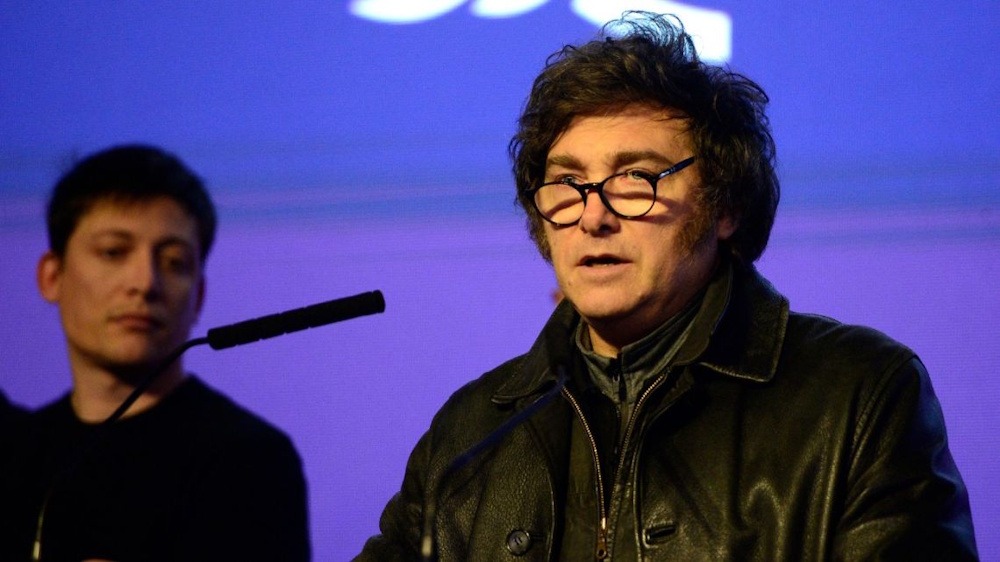
However, only a limited number of nations possess those missiles, and they are not shared with others. Criticism was evident even within the United States. A comparable incident took place in 1988 amid the Iran-Iraq war, when the United States downed an Iranian passenger aircraft en route from Dubai to southern Iran. One hundred and eighty individuals perished while on board. At that moment, they claimed to have confused it with a military aircraft. However, it was not an error; it conveyed an underlying message, a menace. Similar to the destruction of that passenger plane in the 1980s, the events surrounding the school were not merely coincidental. President Javier Milei has reiterated that Iran “is an enemy of Argentina” and characterized himself as “the most Zionist president in the world.” What is your assessment of those statements? The Iranian Embassy refrains from adopting a specific stance regarding President Milei’s remarks. His support holds no significance in the trajectory of this conflict. The previous occasion of your visit coincided with the President’s declaration that Iran was considered an adversary of Argentina. Subsequently, he revised that statement, asserting that Argentina is an adversary of Iran. In any event, he had previously referred to the Iranian government, rather than the Iranian populace. The perspective of the Argentines we are familiar with diverges significantly from that of Milei. However, if he positions himself as the most Zionist president globally, he may be perceived as an adversary of Iran, as Zionism aims to undermine or fragment Iran and is responsible for the loss of innocent lives. However, in that scenario, the responsibility would lie with him, rather than the Argentine populace. What are the potential practical implications of those statements in the context of the war? The implications are nonexistent. Milei’s stance on Iran remains unchanged. The current state of relations is already quite poor, and his position does not change the dynamics at play. It appears he aims to leverage what he anticipates will be a US victory, positioning himself in alignment with that outcome. However, in reality, Argentina lacks the military and economic capabilities to exert influence in our region, rendering his position inconsequential in this conflict. In Argentina, the conflict in the Middle East is frequently associated with the bombings of the AMIA Jewish community centre and the Israeli Embassy, which occurred in 1994 and 1992, respectively. The President’s characterization of Iran as an adversary reignites that discussion. What is your response to that interpretation? What is Iran’s stance on the AMIA allegations?
Iran has consistently refuted any claims of responsibility, and there exists no conviction or evidence substantiating Iran’s involvement in that attack. Nevertheless, the identical allegation is reiterated persistently. Iran has maintained this position for years. We refute the allegations; however, we have made efforts to collaborate in order to address the matter. A Memorandum of Understanding was signed in 2013; however, subsequent changes in the Argentine government led to the rejection of the agreement, which was criticized as a potential cover-up. The allegations in question stem from reports issued by Mossad and the CIA, which lack any legal standing. We had previously indicated our readiness to engage in discussions to resolve the matter, contingent upon a reciprocal willingness to do so. However, it is evident that such a willingness is lacking. Since that time, the circumstances have persisted without alteration. Argentina is urging Iran to extradite its nationals, while Iran is declining the request. The current situation presents a trial in absentia, marking a novel development. The two matters at hand are distinct from one another. The protests that erupted in January originated in the marketplace, driven by economic factors. The bazaar serves as a traditional commercial hub in Iran, continuing to function in cities like Tehran, Tabriz, and Isfahan, and holds significant economic importance. The protests emerged in that context as a result of significant fluctuations in the dollar. The volatility observed can be attributed, in part, to the pressure exerted by the United States on the financial system to restrict Iran’s access to foreign currency derived from its exports. Entities engaging in the purchase of Iranian oil may face repercussions from the United States, potentially resulting in the forfeiture of access to the global financial system. The circumstances led to inflation and economic challenges, subsequently inciting protests among bazaar merchants. In light of that context, certain factions incited unrest over several days, resulting in clashes that led to casualties. Estimates suggest that nearly 3,000 individuals lost their lives, encompassing both security personnel and civilians. Authorities indicate that within those disturbances, there were factions associated with foreign entities, and that certain groups engaged in assaults on civilians or law enforcement to exacerbate the circumstances.
Consequently, Iran perceived those disturbances as an extension of the conflict that commenced in June 2025. In the context of uranium enrichment, what is your response to the allegations concerning the intentions behind Iran’s nuclear programme? Iran asserts its entitlement to pursue its nuclear programme for peaceful objectives, which encompasses uranium enrichment as an integral component of that process. The right in question is regarded as being established under the Treaty on the Non-Proliferation of Nuclear Weapons, to which Iran is a signatory. In contrast, Israel is not a signatory to that treaty and maintains a nuclear arsenal. Despite the damage to certain facilities, the nation maintains its expertise and knowledge base, and it is committed to safeguarding that technology. The conflict has now persisted for a duration of 15 days. In light of the assaults from the United States and Israel, Iran has demonstrated its capacity not only to retaliate but also to engage effectively against one of the most formidable and feared military forces. The Iranian populace has not fragmented; rather, they have come together in unity. This is also altering global perceptions. Numerous individuals, including politicians and diplomats, express astonishment at Iran’s capacity for resilience. The distinction between the world prior to February 28 and the period following that date is significant. The perception of the military power of the United States and Israel has undergone a significant transformation. From our perspective, Iran is successfully resisting and emerging strengthened from this war of aggression.