
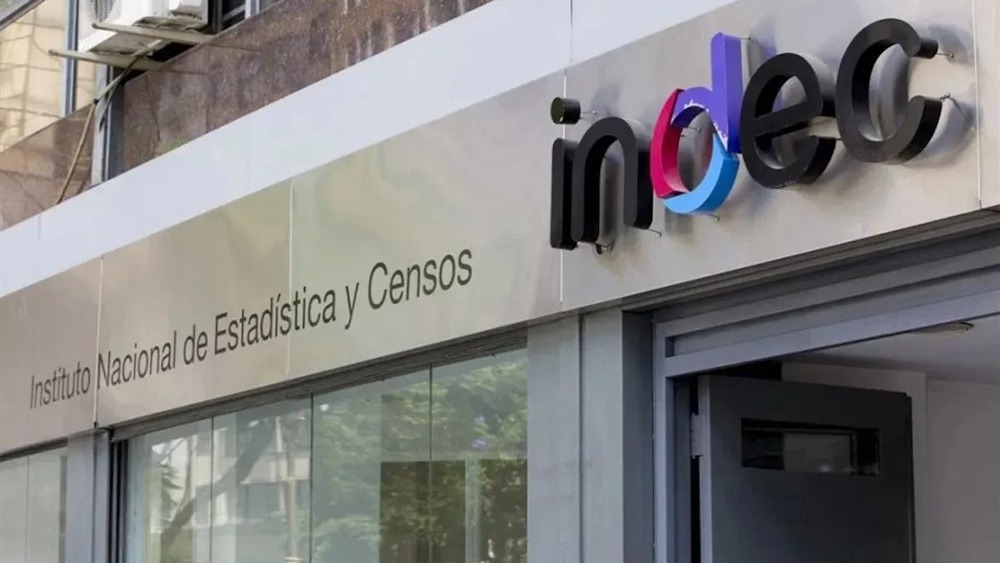
Marco Lavagna unexpectedly stepped down from his position as director of Argentina’s statistics institute INDEC on Monday. The announcement arrives a mere eight days prior to the institute’s scheduled release of January’s inflation data, which, according to INDEC officials, is derived from a formula designed to more accurately represent purchasing power. Nevertheless, shortly after Lavagna’s departure, Economy Minister Luis Caputo stated that the new index would be put into effect “once the disinflation process is fully consolidated.” Our perspective is that the index ought to remain unchanged at this time. “In fact, it makes little difference,” he stated during an interview. Caputo indicated that Lavagna will be succeeded by Pedro Lines, who has been with INDEC since 2016 and has held the position of technical director since 2018. Lavagna’s announcement caught many government officials and workers off guard. “We are appalled,” stated Raúl Llaneza. Llaneza remarked that Caputo’s declaration regarding the INDEC’s decision to refrain from publishing January’s inflation rate using the updated methodology fails to provide workers with “peace of mind,” given that everything was “up and running” for its implementation. “We find it peculiar, a rationale that lacks technical precision — it’s political, and we believe it’s inappropriate,” stated Llaneza. Not all, however, expressed dissatisfaction with Lavagna’s departure. A representative from the Milei administration has alleged that the economist, who was appointed in 2019 by former President Alberto Fernández and remained in position following Javier Milei’s assumption of office, is collaborating with former Economy Minister Sergio Massa. The source indicated that Lavagna was in conflict with Milei’s economy minister, Luis Caputo, along with several other officials.
In his resignation letter, Lavagna expressed gratitude to the workers of INDEC and noted that, throughout his six-year tenure, the institute “made progress in improving public statistics and the national statistical system.” He emphasized that “economic and social realities are constantly changing and that the national statistical system needs to continue adapting and strengthening itself.” He emphasized that certain INDEC projects in that regard are “highly developed,” whereas others “are still in progress.” Over the past year, two prominent directors at INDEC have stepped down: Guillermo Manzano, who oversaw Living Conditions Statistics, and Georgina Giglio, responsible for the Consumer Price Index. Inflation and its measurement are pressing issues in Argentina. Historically designed to function autonomously from governmental influence, the INDEC experienced an intervention during the two presidential terms of Cristina Fernández de Kirchner (2007-2015), resulting in the dissemination of unreliable data. “This feels like déjà vu because on a similar date in 2007, our organization faced political intervention due to dissatisfaction with the Consumer Price Index data for January 2007,” Llaneza informed. Milei was elected on a platform to “exterminate inflation,” as prices surged by 211.4% in 2023, the year he assumed office. Annual inflation moderated to 31.5% in 2025, a figure that, while still elevated by global benchmarks, represented a decline of 180 basis points compared to two years earlier.
Critics have argued that the methodology employed by INDEC to measure inflation during Milei’s presidency results in a flawed index, as it relies on a basket of goods and services that was initially established in 2004. The forthcoming index, scheduled for launch on Tuesday, the 10th, was derived from a basket established in 2017-2018. The primary distinction lies in the fact that the existing approach will allocate greater emphasis on the expenses associated with services and transportation. The government has pledged to alter the index to align with the International Monetary Fund in 2026. The Center of Argentine Political Economy has projected that, had this methodology been applied over the preceding two years, inflation would have risen by an additional 11% in total since December 2023. Caputo suggests that potential declines in inflation associated with the new index might be seen as “not due to economic performance but to the change in measurement,” which explains the government’s decision to forgo the change. Caputo stated that Lavagna’s resignation was a consequence of this decision. “The president and I always shared the view that change had to be implemented once the disinflation process was fully consolidated,” Caputo stated, noting that, in May of the previous year, he believed that by January 2026, the country would be in a more favorable position.
However, he stated that this did not occur as a result of last year’s “political attack” leading up to the legislative elections. Union representative Llaneza characterized Caputo’s explanation as “awkward.” He also noted that Lavagna’s resignation has impacted INDEC staff, as the announcement arrives at a time when the agency will be “at the center of public opinion.” He characterized the workers’ state of mind as “alarmed.” “Historically, we have insisted on an INDEC that operates independently of political influence,” he continued. Lavagna’s professional endeavors have faced criticism from certain officials within Milei’s administration. A source indicated that the former head of INDEC miscalculated the tourist balance, which is an index that assesses outbound and inbound tourism. The figure has garnered attention as it indicates that Argentina is incurring substantial financial losses, with the artificially supported peso facilitating more affordable travel to international locations, including Brazil. The tourist balance became a significant point of contention within the government, leading the Tourism Secretariat to cease financing INDEC for the production of the report. “Moreover, with the new measurement system for inflation, a different professional profile is needed,” the source added.