
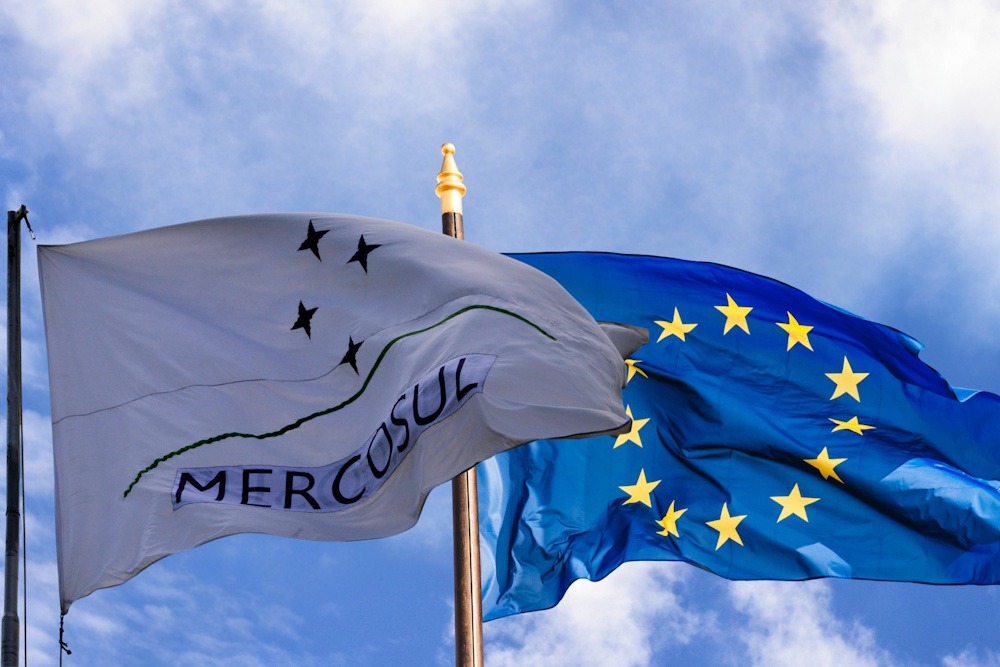
The European Union announced on Monday that a free-trade agreement with the South American bloc Mercosur will provisionally take effect on May 1, despite an ongoing court ruling regarding its legality. The significant agreement to remove tariffs on over 90 percent of trade between the two blocs has sparked division in Europe, with France at the forefront of opposition due to worries that some of its farmers may suffer as a result. However, with the support of a majority of EU nations, Brussels has forged ahead in its efforts to diversify trade amid challenges posed by the United States and China. “Today is an important step in demonstrating our credibility as a major trading partner,” EU trade chief Maroš Šefčovič stated.
“The priority now is transforming this EU-Mercosur agreement into tangible results, providing EU exporters with the platform necessary to capitalize on new opportunities for trade, growth, and jobs.” The move follows Paraguay’s ratification of the deal last week, marking it as the final Mercosur member to take this step after Argentina, Brazil, and Uruguay. “Provisional application ensures the removal of tariffs on certain products as of day one, creating predictable rules for trade and investment,” the European Commission, in charge of EU trade policy, stated on Monday. It stated that it had informed Mercosur partners. Businesses, consumers, and farmers in the EU can therefore begin to enjoy the advantages of the agreement right away.
The EU had previously indicated in February its intention to provisionally implement the deal, leading to a visible rift between its two largest member states, France and Germany. The agreement is still awaiting approval from legislators in the European Parliament, which promptly referred it to the EU’s highest court shortly after it was signed in January. France made an effort to block the deal due to concerns for its farmers, who are apprehensive about being undercut by less expensive goods from Brazil and its neighboring countries.
The agreement establishes one of the largest free-trade zones globally. The EU and Mercosur collectively represent 30 percent of global GDP and encompass over 700 million consumers. The agreement benefits European exports of cars, wine, and cheese, while facilitating the entry of South American beef, poultry, sugar, rice, honey, and soybeans into Europe.