
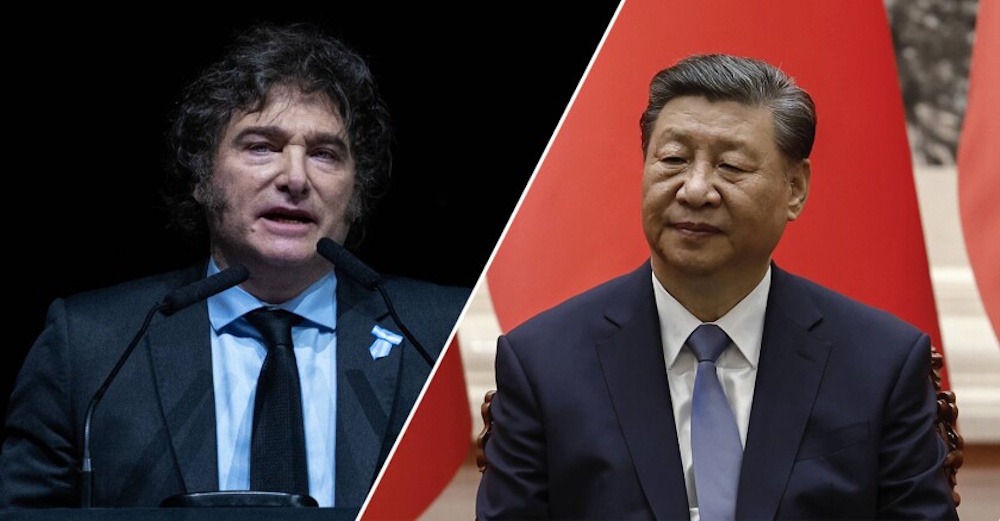
China and Uruguay committed to enhancing their economic ties on Tuesday, coinciding with Javier Milei in Argentina embracing the Trump administration’s revitalized approach in the region. Following a meeting in Beijing between presidents Yamandú Orsi and Xi Jinping, Uruguay and China formalized over a dozen agreements encompassing investment, trade, and scientific cooperation. In a distinct 32-point joint statement, both nations advocated for the initiation of free trade negotiations between China and the South American customs union Mercosur. “We wish to continue all our efforts to support the development plans of both countries by intensifying trade in goods,” Orsi stated.
Trump’s attempts to enforce his interpretation of the Monroe Doctrine have created divisions within the region. Countries such as Uruguay, Brazil, and Mexico have sought to uphold an independent foreign policy, whereas Argentina, Paraguay, Ecuador, and various Central American nations have chosen to align themselves with the United States. Panama has taken the significant step of voiding a contract with a Chinese firm for the operation of two ports. Milei has gained advantages from his strong ties to Washington. The US Treasury helped Milei’s party win midterm elections last October by buying pesos and diffusing a run on the currency with a US$20-billion currency swap. Last week, the US Treasury sold Argentina US$808 million in special drawing rights to facilitate interest payments to the International Monetary Fund.
Countries that have not aligned with Washington’s policies, such as Brazil and Colombia, have faced threats of significant tariffs or experienced suspensions of visa applications. In the previous month, the United States added Uruguay to its roster of 75 countries impacted by a stringent enforcement of immigrant visa regulations. Trump’s carrot and stick approach to diplomacy encounters constraints due to the region’s significant reliance on China for manufactured goods, as well as its role as a purchaser of metals, oil, and foodstuffs. Even Milei has defended his country’s economic ties with China, which include a $18 billion currency swap.
Uruguay, a nation of 3.5 million inhabitants situated between Argentina and Brazil, has endeavored to maintain a delicate equilibrium between the United States and China. The US visa restrictions measure is unlikely to impact a significant number of Uruguayans, “but in terms of the signal it sends of course it concerns us,” Orsi remarked following his meeting with the US ambassador on January 15.