
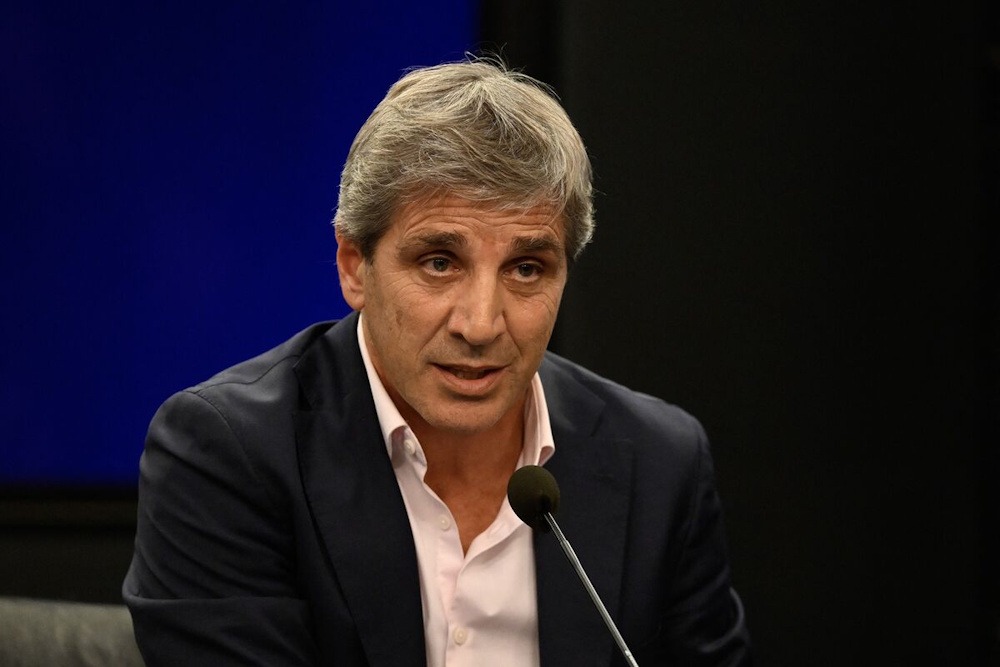
On the concluding day of Argentina Week, the nation’s investment roadshow in Paris, Economy Minister Luis Caputo, accompanied by Cabinet Chief Diego Santilli, unveiled the initiation of Argentina’s Citizenship by Investment Program. “The initiative is part of the process of international opening and integration being promoted by Argentina, together with reforms aimed at strengthening the investment climate and encouraging the arrival of capital,” Caputo explained at the Argentine Embassy in France. He also stated that the program would incorporate “due diligence, financial transparency and risk management standards” aligned with the recommendations of the Organization for Economic Co-operation and Development and the Financial Action Task Force. The minister also emphasised that the government had obtained counsel from a consortium of prominent international firms that specialise in investment migration to “ensure the adoption of international best practices.” Applications will undergo an assessment process designed to protect national security, maintain the integrity of the financial system, and uphold the international reputation of Argentine citizenship.
Applications will be accessible in the fourth quarter of 2026 via two methods: a direct, non-refundable contribution of US$350,000 to the National Treasury or by subscribing to a US$800,000 government security established specifically for the program. The applicant’s spouse and children may also apply, contingent upon their ability to demonstrate the requisite family relationship and fulfilll the contributions stipulated for each category. Spouses and children aged 18 to 25 who are single and childless are eligible to apply for citizenship by making a contribution of US$100,000 to the National Treasury. Individuals under the age of 18 may contribute up to US$25,000. “Under this scheme, a typical family consisting of a principal applicant, their spouse and two underage children may apply for Argentine citizenship for a total of US$500,000. All funds must be channeled through the formal financial system and comply with applicable standards on preventing money laundering, terrorist financing and financial transparency,” the official information states.
Applications will undergo evaluation by the Citizenship by Investment Programs Agency, engaging various specialised public agencies. This includes the State Intelligence Secretariat, the Financial Information Unit, as well as the ministries of Security and Interior. “The resources obtained will be used to continue strengthening the fiscal and financial position of the Argentine Republic,” Caputo stated in the presence of representatives from the involved agencies. The process encompasses various components, including identity verification, tracing and confirming the lawful origin of funds, conducting asset and financial analyses, assessing jurisdictional risks, reviewing applicants’ criminal and reputational histories, as well as their immigration backgrounds. Upon completion of the assessment, the agency will forward its recommendation to the National Directorate of Migration, which holds the authority to approve or reject each application.
“Today, Argentina is a beacon of freedom and investment in the world, and the national government wants to continue strengthening Argentina’s ties with the world, projecting the value of Argentine citizenship internationally and consolidating the country as an open and trustworthy nation,” the economy minister concluded on his final day in Paris. Following his remarks, Santilli stated, “the Argentina that opens its arms, that knew how to be great many years ago.” He also extended his congratulations to Caputo’s economic team, with particular mention of Juan Pazo, as well as Argentine Ambassador to France Ian Sielecki. “Argentina is a country that opens its doors to all those who want to develop, invest, build and create a more prosperous and greater world,” the minister said in closing.
