
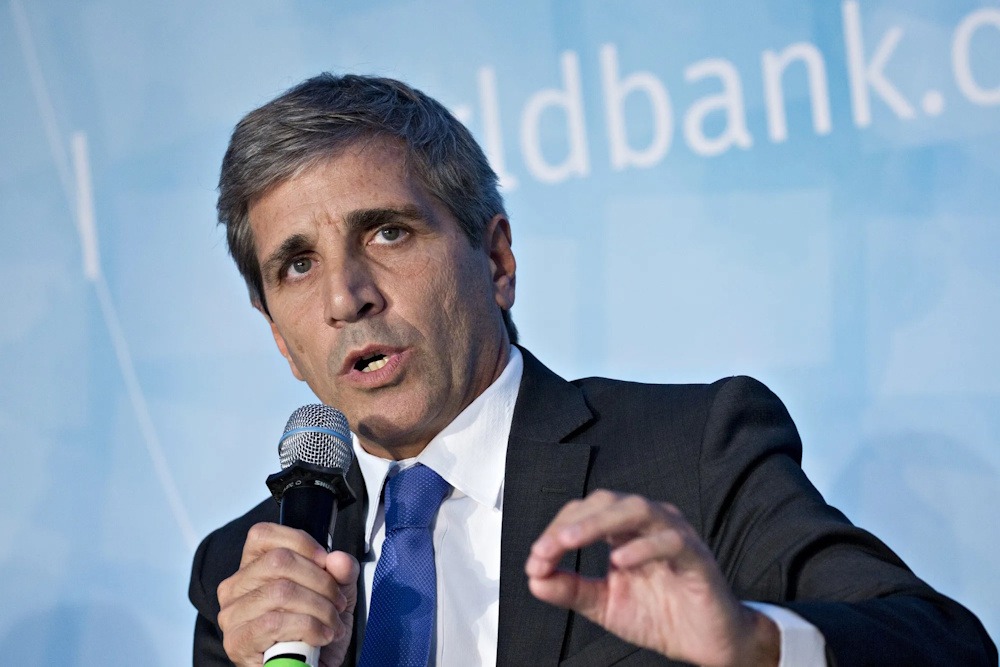
With an emphasis on the hydrocarbons industry, Argentina’s Ministry of Economy announced on Thursday that it will host a second business matching event under the Large Investment Incentive Regime. The announcement was made by Economy Minister Luis Caputo on social media, just one week after the initial event took place in the city of Rosario, Santa Fe. On that occasion, domestic and international companies engaged in mining investments under the RIGI had the opportunity to connect with over 2,500 local suppliers. The upcoming event is scheduled for Wednesday, December 2, in Buenos Aires Province, with President Javier Milei expected to be present. It signifies yet another formal endorsement of energy investments, which, in conjunction with mining and agriculture, rank among Argentina’s primary export catalysts.
Thanks to the robust performance of these three sectors, Argentina’s trade surplus has attained unprecedented levels in recent months, with exports anticipated to surpass US$100 billion in 2026, based on projections by the Economic Commission for Latin America and the Caribbean. The announcement, however, also occurs within a highly challenging context for the majority of supplier companies. Many of them previously depended on orders from the manufacturing and construction sectors, both of which have been significantly affected by Milei’s austerity measures. With 27 approved projects totalling US$76 billion, RIGI investments represent the libertarian government’s primary strategy for enhancing investment and exports, thereby fostering growth throughout the broader domestic economy. Between November 2023 – the month preceding Milei’s assumption of office – and August 2026, the most recent month for which official data are accessible, manufacturing activity experienced a decline exceeding 7%, while construction witnessed a significant drop of 24% during the same timeframe.
The crisis impacting both sectors is a contributing factor to Argentina’s economic slowdown, which commenced in the second quarter of 2026, marked by a 0.6% contraction in GDP on a seasonally adjusted basis. The downturn accelerated so sharply during the third quarter that, even with official September figures still pending, Argentina is widely expected to have entered a “technical recession,” characterised by two consecutive quarters of economic contraction. Estimates from private-sector consulting firms for September are similarly disheartening. While there is an indication of progress relative to July and August, the month-over-month increases were relatively slight. For instance, the consulting firm LCG reported a seasonally adjusted increase of 0.7%, aligning with Equilibra’s estimate, whereas Orlando Ferreres & Asociados anticipated a modest gain of only 0.1%.
Meanwhile, the initial sectoral indicators for October that have been released thus far do not offer a definitive assessment. Automotive production increased by 3.9% month over month on a seasonally adjusted basis in October, as reported by consulting firm Outlier. However, output experienced a decline of 14.4% compared to the previous year. Another example is domestic cement shipments for the local market – a proxy for construction activity – which experienced a significant decline in October, decreasing 9.6% year over year and 6.7% month over month, as reported by the same consulting firm.
