
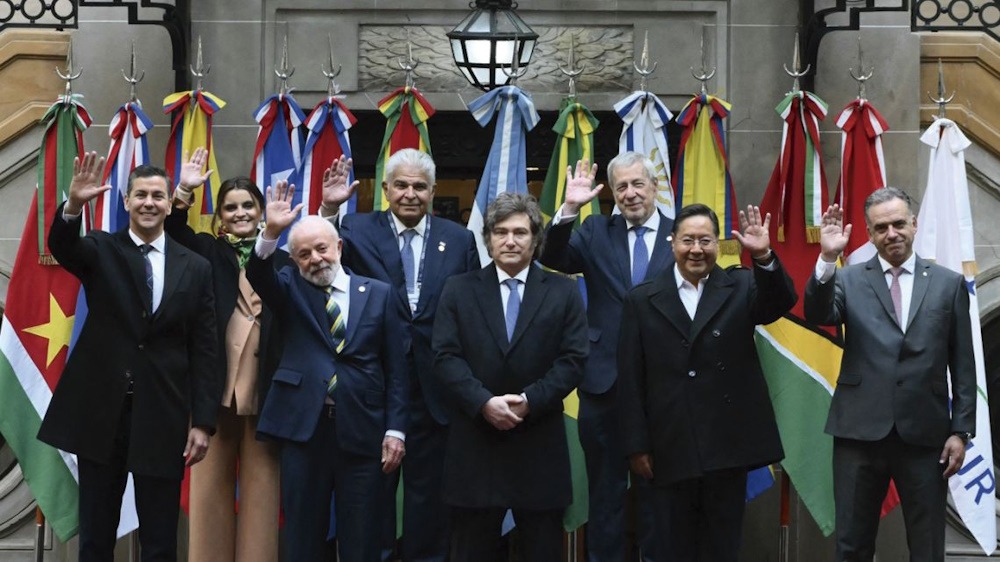
On Wednesday, Brazil’s Senate ratified an agreement between the Mercosur bloc and the European Union, establishing one of the largest free trade areas globally. The agreement encompasses the four founding members of the South American trade bloc and has received ratification from both Argentina and Uruguay. Paraguay’s parliament remains tasked with granting its approval. The European Commission declared last week its intention to provisionally implement the substantial agreement, awaiting the ruling of the EU’s highest court regarding its legality. The decision provoked strong reactions from France, which has spearheaded the opposition to the agreement and has made unsuccessful attempts to obstruct it due to concerns for its agricultural sector, where farmers are apprehensive about being undermined by lower-priced products from Brazil and its neighboring countries.
The agreement was finalized in January following a quarter-century of complex negotiations. The situation gained renewed momentum due to the extensive implementation of tariffs and trade threats by the administration of US President Donald Trump, prompting nations to seek new alliances. The combined economic output of the EU and Mercosur represents 30 percent of global GDP, serving a market of over 700 million consumers. The agreement abolishes tariffs on over 90 percent of trade between the two nations. The agreement is set to benefit European exports of automobiles, wine, and cheese, while simultaneously facilitating the entry of South American beef, poultry, sugar, rice, honey, and soybeans into the European market.
Brazil, recognized as the foremost producer of coffee, meat, and soybeans, among various other agricultural products, emerged as a significant proponent of the agreement. The current global landscape exhibits increased fragmentation, heightened skepticism, and a stronger inclination towards protectionism. “This makes the agreement with our European partners even more relevant and even more necessary,” Senator Tereza Cristina stated during the debate. Spain and Germany support the pact, which is expected to enhance exports of machinery and spirits to the Mercosur bloc.
However, a segment of European farmers expressed their discontent by driving tractors into urban centers such as Paris, Brussels, and Warsaw. Their protests were fueled by concerns over a potential surge of less expensive products manufactured under lower standards and utilizing prohibited pesticides.