
Investors from T. Rowe Price Group Inc. to TCW Group Inc are adopting a strategy that is swiftly gaining traction in emerging markets: channeling funds into Latin American countries that align with US President Donald Trump. Investment professionals at these firms are showing a preference for government bonds from countries like Ecuador and Argentina, where the leadership has established strong connections with the US administration, reflecting what JPMorgan Chase & Co describes as a “new reality” for the region. The trade has been unfolding since Trump’s return to office last year, gaining momentum following the United States’ detention of Venezuelan leader Nicolás Maduro in early January. Rather than retreating in the face of the looming political risks, investors actively engaged with Venezuela’s bond market, driving prices to heights not observed since prior to the nation’s 2017 default. “We should expect the US to remain increasingly interventionist in Latin American politics,” stated Thys Louw. “This presents a dual challenge for markets: it is poised to advantage politically-aligned nations, whereas in left-leaning administrations, the US may leverage policy instruments to exert pressure, leading to subsequent market fluctuations.” The incursion into Latin America – referred to by some as the Donroe Doctrine, drawing parallels to Trump’s interpretation of the Monroe Doctrine that influenced US foreign policy two centuries prior – presents significant implications for sovereign credits in the region and the Caribbean, as noted by Gramercy Funds Management.
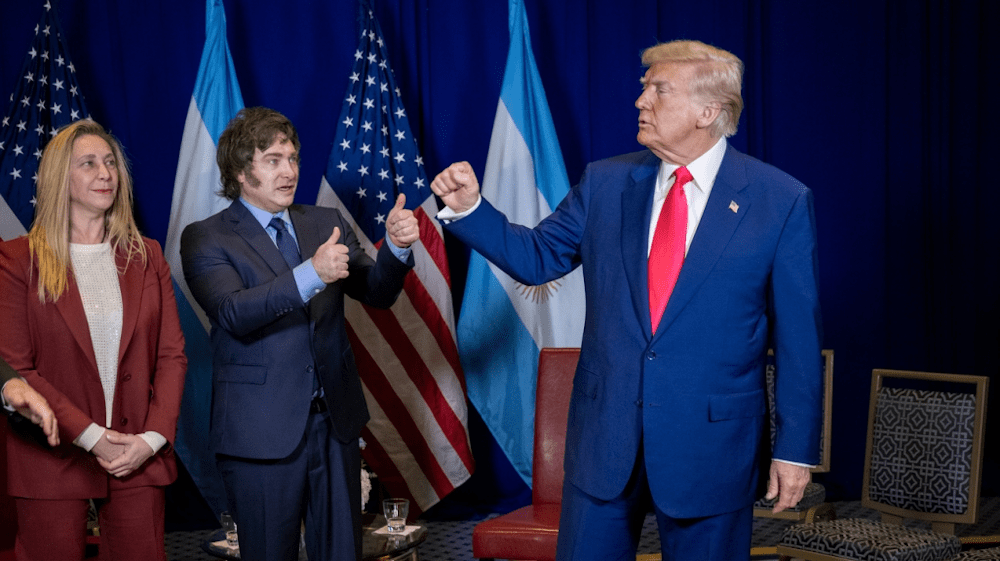
“Governments in the Western Hemisphere should be prepared to face stronger pressure from the Trump administration to ‘pick sides,’” stated Robert Koenigsberger. In Ecuador, President Daniel Noboa has garnered the approval of Trump by commending his foreign policy choices and directing his security forces to collaborate with the US in the fight against drug and weapons trafficking. The debt provided investors with a return of approximately three percent in January, surpassing that of its peers. Last week, the nation re-entered global debt markets for the first time since its 2020 restructuring, successfully finalizing a record US$4-billion transaction. In Argentina, President Javier Milei, recognized as one of Trump’s most ardent supporters on the global stage, secured unprecedented financial backing from the United States prior to a crucial vote last year. The bonds, which have experienced significant appreciation over the past two years, have yielded approximately 3.6 percent thus far in 2026. Bonds issued by other Washington allies, such as El Salvador, have also demonstrated superior performance. “The operation in Venezuela signals a fundamental shift in US engagement with Latin America,” economists including Cassiana Fernández noted in a recent analysis, outlining what they describe as “a new reality” for the region. “Economic relationships, infrastructure ownership, and access to US markets are now explicitly linked to geopolitical alignment.”
Nonetheless, although nations aligned with the US can “clearly be rewarded” and those opposing Trump face potential risks, this represents merely one aspect of the decision-making process, according to Graham Stock. “We do not foresee a scenario in which entire regions become uninvestable due to the shifting geopolitical fault lines,” Stock stated. The closeness to Trump has not consistently resulted in benefits in other areas. India, frequently described as an ally of the United States, has not yet secured a trade agreement with the country. This has resulted in significant outflows from the stock market, as foreign investors divested more than US$4 billion in January, following a historic exodus in the previous year. The currency stands out among emerging markets, having depreciated against the dollar over the past year, with a decline exceeding five percent. Despite the necessity for investors to continually adapt to tariff threats and geopolitical changes under Trump, emerging markets had experienced a remarkable beginning to the year, at least until Friday. Equities experienced their strongest January since 2012, and the majority of currencies have appreciated year-to-date. However, the dollar saw a rebound on Friday amid speculation that President Trump’s nominee for the next chair of the Federal Reserve may not pursue interest rate cuts. The sell-off that commenced on Friday escalated on Monday, with the MSCI emerging-market equities index declining by as much as 2.9 percent in early trading, marking the most significant drop since April. The decline in gold and silver prices, coupled with a drop in oil, heightens the risks for economies that rely heavily on commodity exports.
The prevailing anxiety was exacerbated by concerns regarding Iran, as the supreme leader issued a warning about the potential for a regional conflict following Trump’s deployment of an aircraft carrier strike group to the Middle East. TCW is one of the firms scrutinizing geopolitical developments with greater diligence to anticipate various scenarios under Trump. The Los Angeles-based asset manager has positioned itself with overweight calls on countries such as Argentina. “As we observe the transition from a unipolar to a multipolar world, we can discern the emerging winners and losers,” stated Christopher Hays. Aaron Gifford at T. Rowe has become more cautious regarding Panama bonds, partly due to the potential for increased pressure from Trump concerning the canal. The definitive examination of the hypothesis, however, might be found in Venezuela. Defaulted bonds from the sovereign and state oil company PDVSA have experienced a notable rally, driven by expectations of substantially improved recovery rates. David Robbins, co-head of TCW’s emerging-markets group, anticipates that ultimate recovery values could reach as high as 60 cents on the dollar, an increase from the current level of approximately 40 cents. The endeavor to restructure approximately US$60 billion in debt is fraught with challenges. However, the probabilities escalated significantly following the operation in Caracas, fueled by anticipations that the United States will assume a prominent position in the proceedings. “When you incorporate geopolitics into the mix, things change,” stated Mauro Favini.