
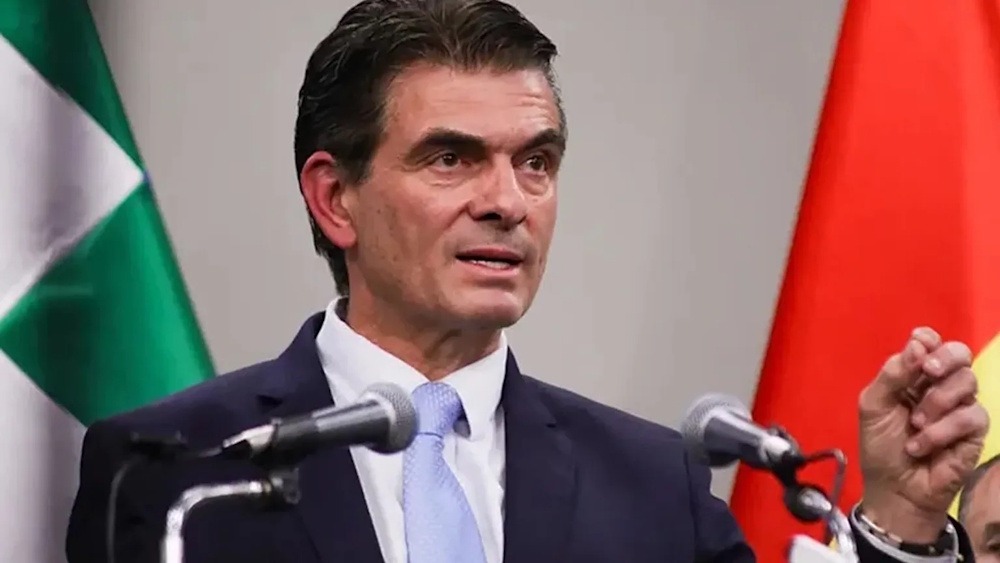
Bolivia has announced a “energy and social emergency” in response to fuel shortages, escalating inflation, and dwindling dollar reserves. The government is set to implement extraordinary measures for a duration of one year to ensure the stability of fuel supply and stimulate economic activity. The announcement arrives amid increasing economic and social challenges confronting center-right President Rodrigo Paz, merely two months into his term. In the upcoming year, individuals and businesses will be granted exceptional authorization to import and sell gasoline and related products without restriction, thereby ensuring a stable supply within the country. They will be permitted to utilize international prices, subsequent to the recent elimination of fuel subsidies. Diesel will be excluded from the list of controlled substances for a duration of one year. The provisional measures are designed to “restore quality of life to Bolivians and guarantee the integral reconstruction of the Bolivian economy,” as stated in the decree outlining the new provisions.
Paz articulated on X that he perceives economic stabilization as “only the first step” in his agenda. “The fundamental challenge lies in constructing a sustainable and equitable growth model that encompasses all Bolivian families and manifests in public infrastructure, healthcare, education, and employment opportunities.” On Tuesday, the Inter-American Development Bank announced its intention to extend US$4.5 billion to Bolivia as a component of a 2026-2028 aid package, aligning with a broader stabilization agenda. The package encompasses targeted funding for social welfare, private investment, infrastructure development, budgetary support, and capital mobilization efforts. The emergency declaration follows a period of significant disruption in Bolivia, where protests and roadblocks effectively immobilized the country for six days last week. This unrest was sparked by an economic austerity package that was enacted by decree in December by Paz. The government removed fuel subsidies, provided specific incentives for substantial investments in domestic natural resources, and implemented a freeze on public sector salaries, among various other initiatives.
The decree faced significant opposition from blue-collar workers, miners, farmers, and teachers, along with other segments of the working class, who perceived it as a marked departure from decades of left-leaning policies. Critics argued that it favored large investors at the expense of individuals grappling with the challenges of rising inflation. On Tuesday, Paz, in conjunction with Bolivia’s unions, made the decision to annul the decree. His decision resulted in the cessation of the protests and roadblocks. Paz reached an agreement with the unions on a new decree, which introduced several modifications to the original while preserving certain elements, such as the removal of fuel subsidies and increases in payments for students and the elderly, in addition to adjustments to the minimum wage.
However, a segment that facilitated the swift approval of investment projects was omitted. The Bolivian government has engaged in fuel subsidies for two decades, importing gasoline and other fuels at global prices while offering them at prices lower than market rates within the domestic market. This ultimately depleted the nation’s dollar reserves and drove annual inflation above 20% in 2025. The Bolivian government asserts that the cessation of subsidies enables the state to conserve approximately US$10 million each day. The recent adjustments in pricing indicate that Bolivians will be facing an increase of 86-162% in their expenses. Despite the cessation of roadblocks and protests, the Argentine Foreign Ministry released a statement on Tuesday advising Argentine nationals to refrain from traveling to La Paz in the coming days, “considering that the situation remains unstable.” The ministry advises that travelers whose journeys to Bolivia are deemed essential should opt for air travel instead of overland routes. The foreign ministry also “emphatically” advised acquiring travel insurance that encompasses disruptions arising from protests and analogous occurrences.