
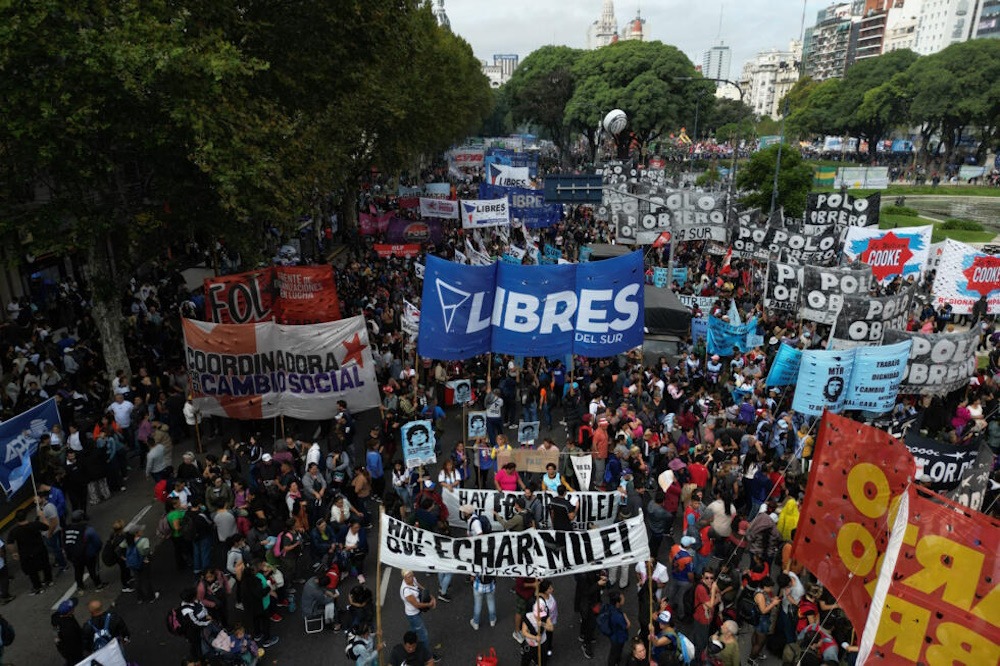
The General Confederation of Labor orchestrated a significant demonstration on Thursday in Plaza de Mayo to oppose the government’s proposed labor reform. The demonstration united both factions of the Argentine Workers’ Central alongside various social movements, delivering pointed admonitions to the government regarding its proposed alterations to Argentina’s labor legislation. During the principal gathering, union leaders indicated a willingness to consider additional industrial action. “This plan of struggle is just beginning and, if we are not heard, it will end in a nationwide strike,” stated Octavio Argüello. Cristian Jerónimo contended that the reform “offers no solutions for the world of work” and cautioned that the bill “is written in a regressive manner, favoring large corporations,” adding that it does not benefit small and medium-sized enterprises or generate genuine employment opportunities.
Criticism has also focused on the broader economic and social context. Jorge Sola, warned of deteriorating production and labor conditions in Argentina, stating that “the social fabric has been unraveling for two years: one company closes every hour and hundreds of workers lose their jobs every month.” The decision to mobilize followed a midweek meeting of the CGT’s executive council, which brought together leaders from key unions in sectors such as trucking, construction, and healthcare. Consensus was reached on a strategy to oppose the Labor Modernization Law, which proposes changes to severance pay, working hours, vacation rights, dismissal procedures, and the creation of an hours bank.
The march also drew political backing. Buenos Aires Province Governor Axel Kicillof said the proposal “doesn’t contain a single element that improves workers’ conditions” and added that it lacks support from the struggling SME sector. After a full day of informational hearings in the Senate, the government announced that debate on the bill would be postponed until February, despite an initial plan to secure preliminary approval the following week. Patricia Bullrich, chair of the Senate Labor Commission, confirmed that the new debate date is February 10 and said the commission would endorse a version of the bill that remains open to changes, explaining that many sectors had requested more time to work on the legislation rather than rushing discussion in late December.
Attention will now turn to other legislative priorities. On December 26, lawmakers will vote on the 2026 budget and the Fiscal Presumption of Innocence bill, which passed the lower house overnight. Bullrich said the commissions would back a version of the labor reform bill to provide “a certain degree of certainty,” though the final text has not been disclosed. Senator Mariano Recalde of Fuerza Patria welcomed the extension of debate but criticized the draft for failing to incorporate meaningful observations or proposals. The government aims to secure commission approval of the 2026 Budget bill on Friday, December 19, before pushing for Senate approval within the year’s remaining business days; otherwise, the Casa Rosada may be forced to extend the 2023 budget for a third consecutive year.