
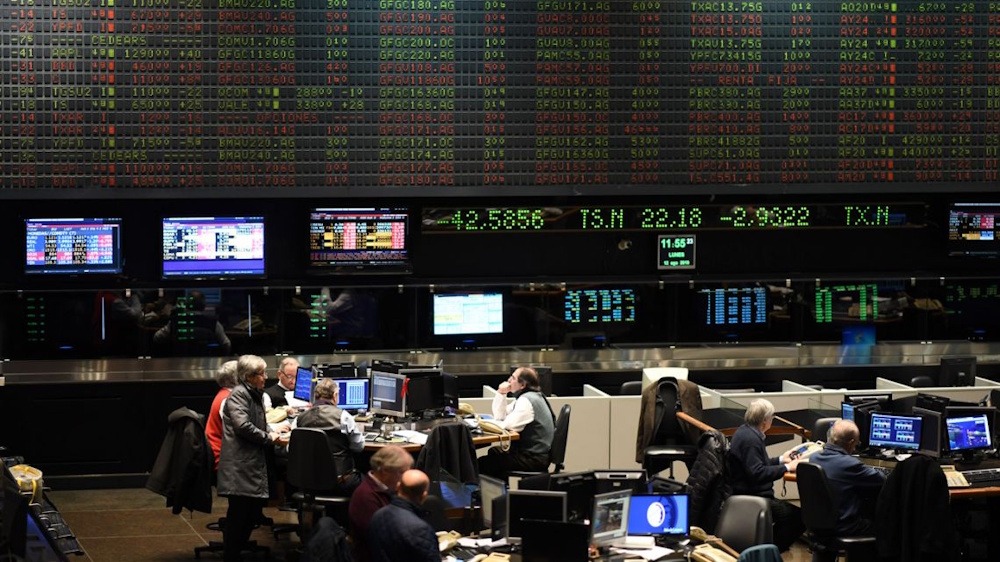
Argentine markets reacted positively to the legislative approval of the 2026 budget on Friday, despite a moderate effect on asset prices. Analysts indicate that markets had anticipated the passage of the bill and are now focused on the administration’s approach to implementing structural reforms. “The approval of the budget holds significant importance; however, it was anticipated, which explains today’s subdued response from financial assets,” stated financial analyst Gustavo Ber in an interview. In a similar vein, Pablo Repetto remarked that the approval did not significantly alter the situation, as there was “no expectation” that the Senate would oppose the bill.
Argentine companies listed, via American Depositary Receipts, exhibited stability, experiencing only minor losses. Tech firm Mercado Libre stood out, experiencing an increase exceeding 10%. Meanwhile, the S&P Merval, an index reflecting the performance of the top-tier companies in the Buenos Aires stock exchange, experienced a decline of -0.4%. Bonds are exhibiting a varied performance, with increases reaching as high as 0.3%, primarily driven by the Global 2030, closely followed by the Global 2035 at 0.3%. The Bonar 2035 experienced a decline, registering a decrease of 0.1%. JP Morgan’s EMBI index, reflecting country risk, declined to approximately 571 basis points.
A report indicated that, following the approval of the budget and the Fiscal Innocence Law, the government demonstrated its legislative strength. The document indicated that the two laws, along with the ruling party’s success in the October midterms and the adjustment in currency bands, “aligned expectations positively for Argentine assets. In the early months of next year, [the government] will move forward with structural reforms, mainly the labor reform, with an estimated fiscal cost of 0.4–0.5% of GDP,” the document stated, projecting the country’s coffers to achieve a primary surplus of approximately 1.2–1.5% of GDP by 2026.
Ber indicated that the market’s attention is directed towards the government’s strategy for securing the remaining funds necessary for the US$4.2 billion debt maturity scheduled for January 9. Another aspect to observe will be the financial strategy implemented to “achieve a rollover and accumulate reserves,” alongside the legislative ability to advance with “structural reforms.” Repetto noted that the market has priced in the outcomes of October’s election and the commitment to fiscal discipline, although the anticipated structural reforms “have already been incorporated as fact” into asset valuations. He stated that “the big issue” is how the government will accumulate international reserves. Repetto noted that the monetary scheme announced last month “is already exhausted,” as the peso is “unnecessarily appreciated,” which is fueling devaluation expectations. “Unfortunately, for all the accomplishments in the fiscal sector, the opposite is happening in the exchange rate area,” he stated, noting that the administration is perpetually generating vulnerability. “They will always need a bailout — for a year and a half, we have been going from bailout to bailout, and well, you can’t live on bailouts,” Repetto concluded.