
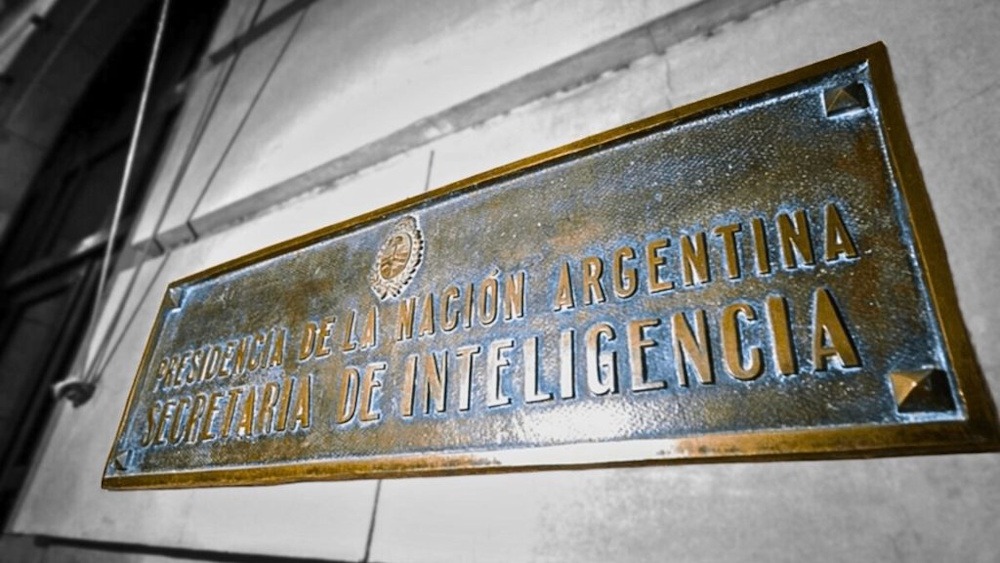
President Javier Milei’s administration has announced the declassification and publication of nearly 500 pages of official documents from Argentina’s intelligence services, spanning the years 1973 to 1983, which includes the seven-year duration of the country’s harsh military dictatorship. The documents have been made available on the official website of the Presidency, originating from the archives of the State Intelligence Service (Secretaría de Inteligencia de Estado, or SIDE). The documents encompass a variety of materials, including office supply inventories maintained by the intelligence agency, as well as records that outline the establishment of divisions focused on monitoring universities, trade unions, corporations, and both political and social entities.
“We are initiating the procedure for the publication of historical documents corresponding to the period 1973-1983,” stated SIDE in a post. “The initiative is a component of a policy designed to enhance the institutional framework of the National Intelligence System and its accountable relationship with society,” the intelligence service stated in its post. At this initial stage, “a set of 26 official documents totalling 492 pages” has been released, accompanied by a guide to the declassification of the documents to facilitate their reading. The files have been systematically arranged into thematic folders, reflecting their historical and institutional significance, to enhance accessibility and facilitate comprehension.
Certain documents advocate for “strategic psycho-sociological intelligence,” mandating the surveillance of news media to achieve the objective of “ascertaining the prevailing themes, motivations, arguments, and ideological characterizations (political, religious, economic, philosophical, etc.), literary, etc. Others received directives regarding operational adjustments in response to budget reductions affecting the intelligence services, including measures like turning off lights in unoccupied rooms to conserve electricity costs. “The publication of historical archives strengthens institutional credibility, helps debunk conspiracy theories and demonstrates a commitment to the truth,” as stated in a guide accompanying the documents.
The release of the long-classified files occurs just one week prior to the 50th anniversary of the coup d’état on March 24, 1976, which marked the ascent of the nation’s final military dictatorship, enduring until 1983. Estimates from human rights organizations indicate that around 30,000 individuals were abducted and went missing during the period characterized by state terrorism. Officials within the Milei administration assert that the figure is lower. Following the restoration of democratic governance, Argentina has initiated legal proceedings against numerous individuals implicated in crimes against humanity committed during the dictatorship, predominantly targeting former military and police officials, while also including some civilian defendants.