
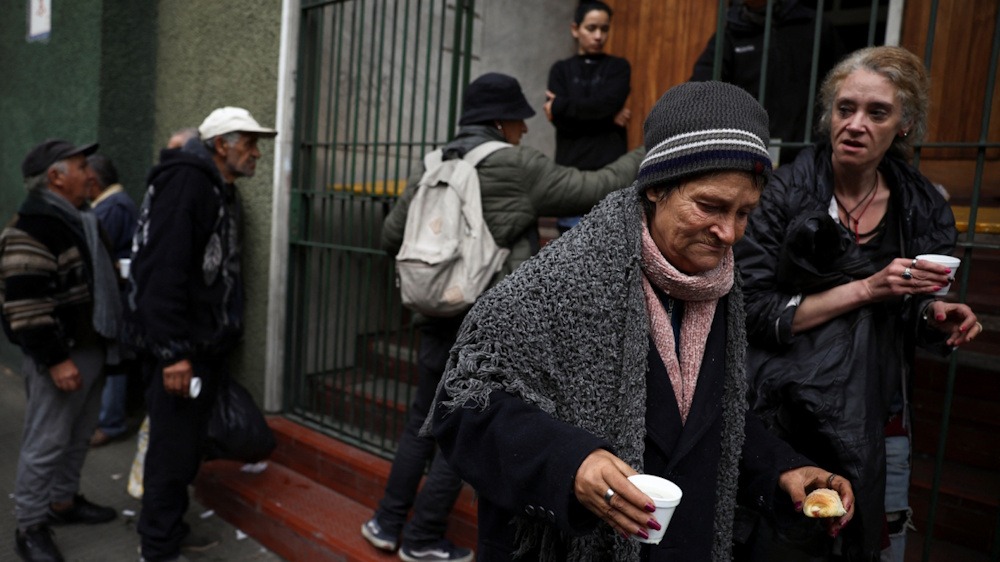
Poverty in Argentina decreased to 28.2% in the second semester of 2025, as reported by the government’s statistics institute, INDEC, on Tuesday. This represents the lowest figure recorded since the first half of 2018. In the interim, 6.3% of the population in the country experienced extreme poverty. Extrapolated to the total population, 13.1 million individuals reside below the poverty line, with 2.9 million experiencing extreme poverty. In comparison to the first half of 2025, the poverty rate experienced a decline of 3.4 percentage points, having been recorded at 31.6%. Extreme poverty experienced a decline of 0.6%.
Poverty and extreme poverty are contingent upon households’ capacity to afford the essential food basket and the comprehensive basic basket. In comparison to the preceding six-month period, the average total household income experienced an increase of 18.3%, whereas the baskets saw average increases of 11.9% and 11.3%, respectively. “POVERTY CONTINUES TO DECLINE,” President Javier Milei posted on X, emphasizing “facts, not fiction” and referencing “MAGA,” the slogan associated with U.S. President Donald Trump, which stands for Make America Great Again. In December, a report from the Social Debt Observatory at the Argentine Catholic University indicated that the decline in poverty and destitution might have been “overestimated” by INDEC, attributed to alterations in their measurement methodology.
“It is possible that around three-quarters of the drop in the levels since 2023 may respond to a statistical effect,” the observatory stated at that time. The representatives of INDEC workers promptly issued a statement highlighting “a widespread public reaction, in a context of growing discredit toward the institution following Milei’s interference, which led to the resignation of the previous director.” The employees of the institution provided an assessment of the index’s implications, emphasizing that “the figures released by the President are not correct” and are “exaggerations that discredit the work carried out by those of us who work at the institute.”
They concluded that, “the figures must be analyzed with caution.” It is inappropriate to characterize the situation as a solid or sustainable improvement; instead, it unfolds within a context marked by escalating labor precariousness, the proliferation of multiple jobholding, increasing household debt, and deteriorating unemployment rates. It is crucial to moderate interpretations of these figures and examine them beyond basic official assessments to more precisely evaluate the gravity of the situation. Raúl Llaneza, union representative of INDEC workers, stated to the Herald that, “We do not view this data as indicating a downward trend in the index.” Upon the release of the figures for the first half of this year, an upward trend may emerge, influenced by various factors.