
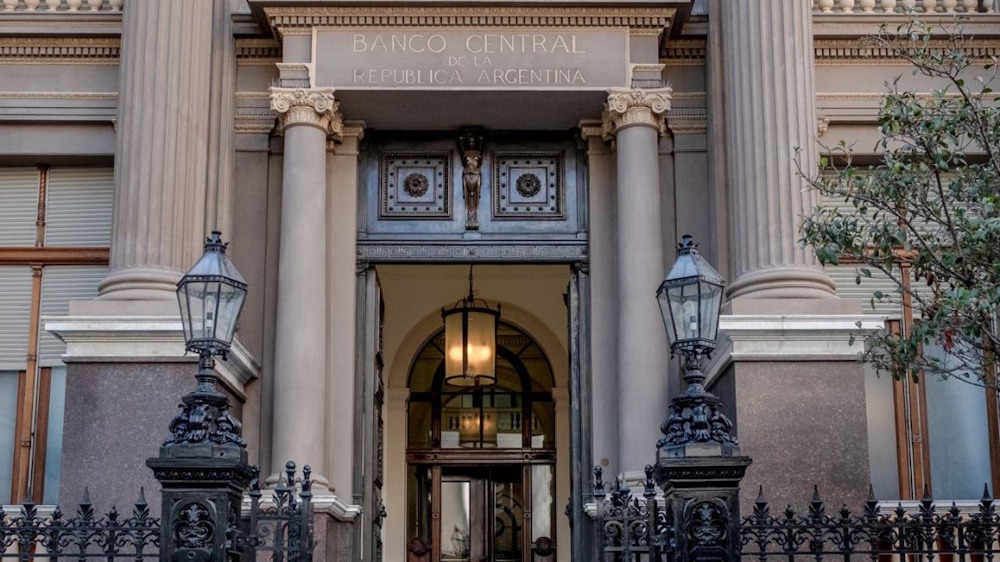
With only five trading days remaining before the significant January 9 deadline, Argentina’s Treasury possesses merely US$1.9 billion of the US$4.3 billion it is obligated to pay, despite recent initiatives aimed at enhancing the country’s dollar reserves. Economy Minister Luis Caputo retains several avenues as he endeavors to consolidate the remaining resources. The options under consideration encompass a potential repurchase agreement, which functions as a loan, with US banks, or the possibility of utilizing Argentina’s US$20-billion swap line with the US Treasury Department. Currently, Caputo has minimized the probability of issuing bonds internationally in January. On Tuesday, Argentine authorities initiated preparations for a repurchase agreement, as the Economy Minister executed a debt swap with the Central Bank, marking a continuation of the government’s earlier repos with banks.
Bond investors maintain a general sense of optimism regarding the January 9 payment, which encompasses both principal and interest. Argentina’s global bonds maturing in 2030 are currently trading at approximately 85 cents on the dollar, reflecting a 44 percent increase since September, as per data. As the maturity date approaches, President Javier Milei’s administration faces the imperative to either increase its dollar acquisitions, obtain a bank loan, or utilize one of the alternative strategies proposed by Caputo. The task is being complicated by a market that continues to express concerns regarding the government’s demand for dollars and its potential effects on the peso. “The issue is that there are only five trading days remaining. “Six months ago, we would have seen this as a small amount relative to the trade surplus,” stated Juan Manuel Pazos. “However, with five trading days remaining until maturity, it appears that a significant portion of the FX market’s daily volume is at play,” Pazos stated. The Economy Ministry and Central Bank of Argentina refrained from providing any comments.
The peso has been exchanging at approximately 1,450 per dollar in recent days, exhibiting daily fluctuations of under one percent since November 26. Since the beginning of its term in 2023, Argentina’s government has employed the exchange rate as a crucial anchor for domestic prices in its battle against inflation. In early December, Argentine officials intensified their efforts to amass dollars through two primary avenues: a constrained hard-currency debt issuance totaling less than US$1 billion and consistent acquisitions in the official market. The Argentine Treasury’s dollar holdings experienced a rapid increase, with balances rising from under US$100 million on December 4 to approximately US$2.1 billion in the latest figures provided by the Central Bank. One final option for the January 9 maturity may involve the BCRA; however, its net reserves are reportedly at or near zero, or even negative, as per various private consultancy estimates. This situation underscores the necessity for the Treasury to enhance its deposits.
“The news flow out of Argentina is uniformly positive,” if one overlooks the BCRA’s net reserves and the Treasury’s US$1.9-billion dollar deposit at the Central Bank, stated Walter Stoeppelwerth in a report to clients. Recent modifications to the nation’s foreign exchange framework may facilitate the accumulation of dollar reserves beginning next month. Under the new regulations, the BCRA will adjust its crawling peg in accordance with the inflation rate from the preceding month, as opposed to the former rate of one percent per month, indicating a more rapid nominal depreciation. Inflation in Argentina has consistently exceeded 2% since August. In conjunction with the shift, the Central Bank delineated a more systematic strategy for dollar purchases and reserve accumulation, incorporating constraints on daily interventions to mitigate uncertainty regarding the timing and nature of official market engagement, all while maintaining a balance between exchange-rate stability and debt obligations. The BCRA, in a statement on Monday, characterized the recent shift as the initiation of a program aimed at fostering growth, maintaining price stability, and replenishing liquid reserves. The Central Bank announced its intention to strike a balance between monetary discipline and the accumulation of reserves. Nonetheless, that could present difficulties, Pazos remarked. “They’ll have to buy a lot every day to get there or borrow from someone,” he stated, alluding to the US$2.4 billion shortfall faced by Argentina’s Treasury.