
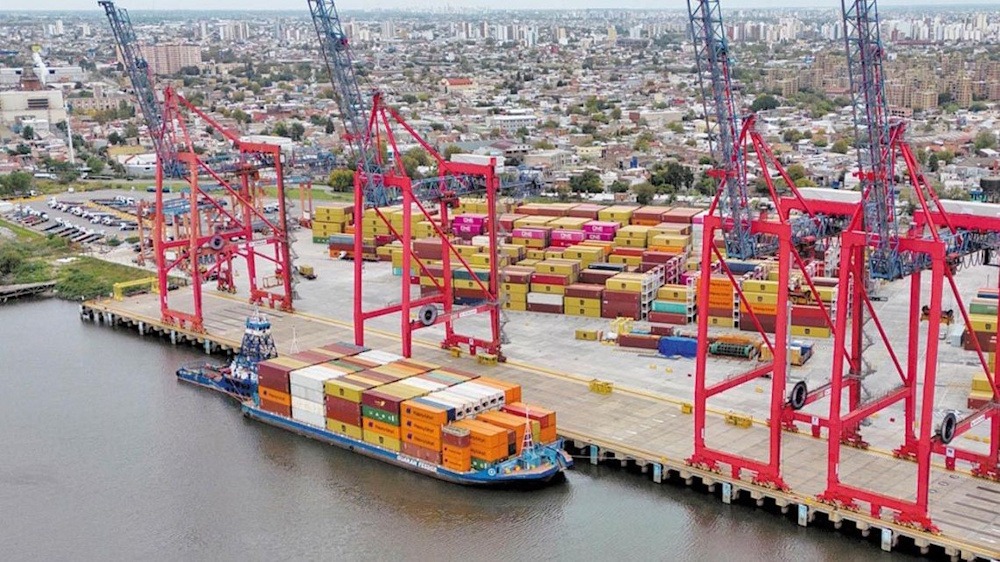
With the economy officially in a technical recession, the divergence in economic performance across sectors has gained particular significance, especially considering the challenging conditions confronting the industrial sector, which has been one of the hardest hit by President Javier Milei’s economic policies. This is occurring even with official data indicating unprecedented export levels in recent months, propelled by a surge in energy, mining, and agricultural exports. Argentine goods exports reached US$87 billion from January to October 2026, reflecting a 22% increase compared to the corresponding period in 2025, as reported by INDEC, the national statistics agency. In the first ten months of 2026, exports had already marginally exceeded the total for the entire year of 2025, establishing a new all-time high. Nevertheless, the economy is experiencing a recession for several reasons, including the crisis in the domestic manufacturing industry, which has historically been one of the primary engines of Argentina’s economy. Manufacturing constitutes approximately 18% of Argentina’s GDP, as reported by INDEC’s national accounts. Subsequently, commerce accounts for 15.2%, followed by real estate and business activities at 13.9%, and transportation at 9.1%. The sector contributes 10% to formal private-sector employment, ranking just behind commerce at 17.4%.
However, following the inauguration of the Milei administration, the situation has progressively worsened, as the sector contends with diminishing consumption and increasing competition from imported products. Only a limited number of sectors have succeeded in maintaining competitiveness within export markets. One of the primary conclusions drawn from the Quarterly Report on Argentine Exports, recently released by the Group for Productive Development and Internationalisation at the University of Buenos Aires School of Economic Sciences, is as follows. “Following the post-pandemic recovery, economic activity reached recent highs in 2022 and early 2023. Since then, it has been contracting and, although it has experienced partial recoveries, it has failed to return to those levels,” said the report. In 2024, industrial activity recorded a sharp decline before recovering during the second half of the year. However, since early 2025, it “appears to have been following a clear downward trend.” Between January and September 2026, industrial output was 12% lower than the level recorded during the same period in 2022, resulting in production levels akin to those observed in late 2019 and marginally above early 2024 levels. However, even within the industrial sector, performance exhibits significant variability. Export-oriented industries have experienced growth relative to previous years, in contrast to those that face competition from imports and rely on the domestic market.
Argentina’s export-oriented industrial sectors experienced a 2.5% increase in production over the past 12 months compared to 2022. In contrast, sectors orientated toward the domestic market experienced a 12% decrease, whereas those facing competition from imports saw a decline of 19%. The report’s authors emphasised that these three groups do not function in isolation. “When domestic production loses market share to imports, the resulting decline in economic activity and income can further weaken the domestic market, creating a cycle that reinforces the downturn in industrial activity,” they explained. For this reason, “improving competitiveness is essential, not only to regain domestic market share in industries competing with imports, but also to create new export opportunities and help strengthen employment and incomes, thereby stimulating domestic demand.” They also noted that domestic demand “can receive a boost through other channels,” including higher real wages, more favorable credit conditions, and increased investment in export-oriented industries. Industries facing competition from imported goods experienced the most significant downturn among the three categories. The contraction impacted the chemical industry, metal production, machinery and equipment, as well as other manufacturing sectors.
The contrast was particularly stark in machinery and equipment, where output fell 36% amid “weak investment demand.” In the chemical industry, imports experienced a remarkable increase of 277%, whereas domestic production saw a decline of 14%. Furniture and mattress manufacturing was among the limited sectors to exhibit an enhancement, with output rising by 17%. Meanwhile, industries orientated toward the domestic market-which encompass food manufacturers and suppliers to the construction sector-were the second-most affected category within manufacturing. Among food producers, beverage manufacturing experienced the most significant decline, with output decreasing by 19% relative to 2022. In construction-related industries, seven of the eight categories experienced double-digit declines, with clay and ceramic manufacturing notably declining by 44%. This reflects a 14% contraction in construction since Milei took office, driven by his decision to halt public works projects as part of his austerity program.
