Dollar Resurges Against Argentine Peso Amid Electoral Risks
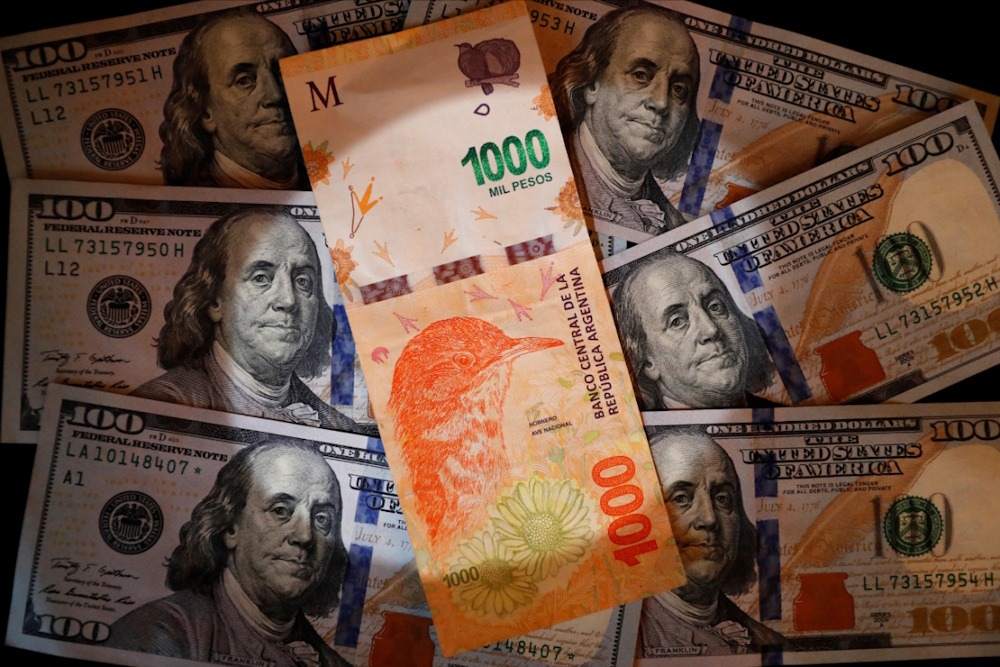
After a prolonged period of inactivity, the dollar has recently experienced a resurgence, prompting apprehensions among investors and market participants. On Wednesday, the U.S. currency achieved its seventh consecutive daily gain in the wholesale market, concluding at AR$1,604. The wholesale exchange rate functions as the standard for exports and retail pricing. This marked the inaugural occasion on which the currency surpassed the AR$1,600 threshold, establishing a new nominal peak. Nevertheless, the wholesale exchange rate has increased by just over 10% thus far this year, while inflation has surged by 26% between January and October. Walter Morales contended that the increase was propelled by a confluence of factors, encompassing both domestic and international influences.
He expressed apprehensions regarding the 2027 financial framework and the potential for country risk to surpass 1,100 basis points, in addition to “electoral risk,” specifically the likelihood that Javier Milei may not achieve reelection. He also highlighted the waning attractiveness of the carry trade in Argentina and the rising demand for dollars from Argentines travelling overseas. On the international front, he said there was a “hostile external environment,” characterized by a strong dollar against other currencies, including the Argentine peso. In fact, the dollar had reached its highest level since March 2025. Compounding these pressures are indications that the U.S. Federal Reserve may further tighten monetary policy, alongside decreases in soybean and oil prices in international markets. Interestingly, the CCL dollar, the second most important exchange rate for market participants, declined by 1% on Wednesday to AR$1,776.
Consequently, the disparity in exchange rates between the CCL and the wholesale dollar decreased from 12.6% to 10.4%. Markets have generally viewed this spread as a signal of anticipated future increases in exchange rates. The challenge facing Milei’s administration is that, following a prolonged phase where the exchange rates were nearly aligned, the disparity has started to increase once more in recent trading sessions. On Thursday, the wholesale dollar concluded its upward trajectory, settling at AR$1,601.50. However, the CCl dollar climbed to 1,835, reflecting a 3% increase, thereby widening the gap between the two exchange rates to over 14%. Analysts suggested in their daily report that “there may have been some official intervention in alternative exchange-rate markets,” such as the CCL dollar market, where dollar-denominated bonds are bonds.
Similarly, in a report to clients, experts at brokerage firm Portfolio Personal Inversiones said that “signs of official intervention have once again emerged” following the decline in the CCL dollar. It has been suggested that the Central Bank of Argentina may have taken measures to stabilise financial dollar exchange rates and address the widening exchange-rate gap, which has escalated to its peak since the partial lifting of capital controls in April 2025. However, they acknowledged that they lacked access to reserve data that would enable them to confirm or quantify the operation. They argued that “developments over the next few trading sessions in the foreign-exchange market will be crucial, as it remains to be seen whether the gap can be kept at around 10% without further drawing on BCRA reserves.”
They also noted that market participants would be watching to see “whether narrowing the gap below this threshold gives the BCRA room to resume purchases in the official foreign-exchange market (MLC).” Meanwhile, the Central Bank has ceased its reserve purchases during the past three trading sessions, which aligns with the increase in the dollar’s value. In the current month of November, average daily purchases have reached a mere US$25 million, a significant decline from the US$66 million observed in October. For Morales, this reflects “increased hedging demand, external payments, and debt maturities, all of which have reduced the available surplus for purchases.” Nevertheless, the balance for November remains favourable, with purchases amounting to US$344 million and cumulative purchases for 2026 reaching US$16 billion.